Fresh flowers on cake need a different buying decision from flowers for a vase. A bloom can look immaculate, belong to a familiar plant and still be unsuitable for food. Decide what is allowed to touch the frosting before choosing the colors or arranging a single stem.
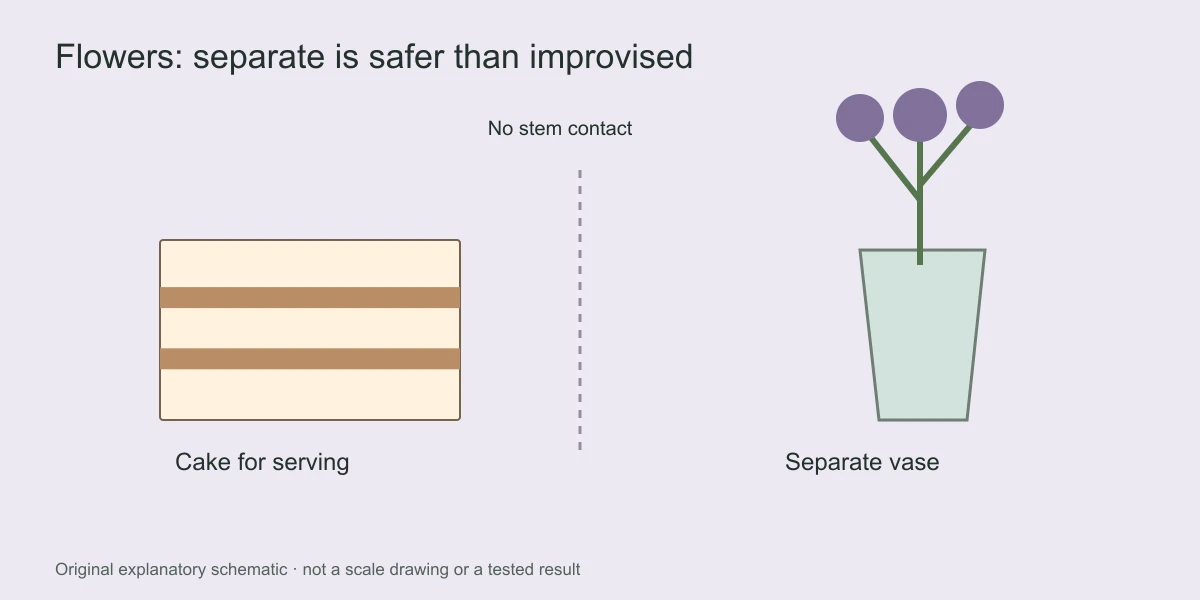
The most straightforward home-baking approach is to buy correctly identified flowers specifically grown and sold for eating, then use the edible parts as the supplier directs. If the flowers are ornamental, unknown or chemically unsuitable, keep them in a separate arrangement beside the cake. A beautiful display does not require every decoration to sit on the dessert.
Identify the flower and its growing history
Edibility belongs to a particular species and sometimes a particular plant part. A common name is not enough: different plants can share similar names. Colorado State University Extension recommends scientific identification and warns against consuming florist, garden-center or nursery flowers because they are not grown for food and may receive unsuitable treatments.
Ask the supplier for the botanical name, confirmation that the flowers were grown for culinary use, and preparation instructions. Keep the packaging until after the event. That gives you more useful information than a photograph or a verbal description such as “garden flowers.” If the supplier cannot confirm the identity or food-use suitability, choose something else.
Do not assume that organic, local or freshly picked means suitable for eating. A home garden may have been treated, exposed to animal contamination or planted with a species that only resembles an edible one. Identification and growing conditions are separate checks; passing one does not automatically pass the other.
Choose the design around safe materials
Start with the smallest arrangement that communicates your idea. Three culinary flower heads placed deliberately can look more considered than a dense crown covering the cake. A limited arrangement also makes it easier to inspect every piece and remove decorations before serving if necessary.
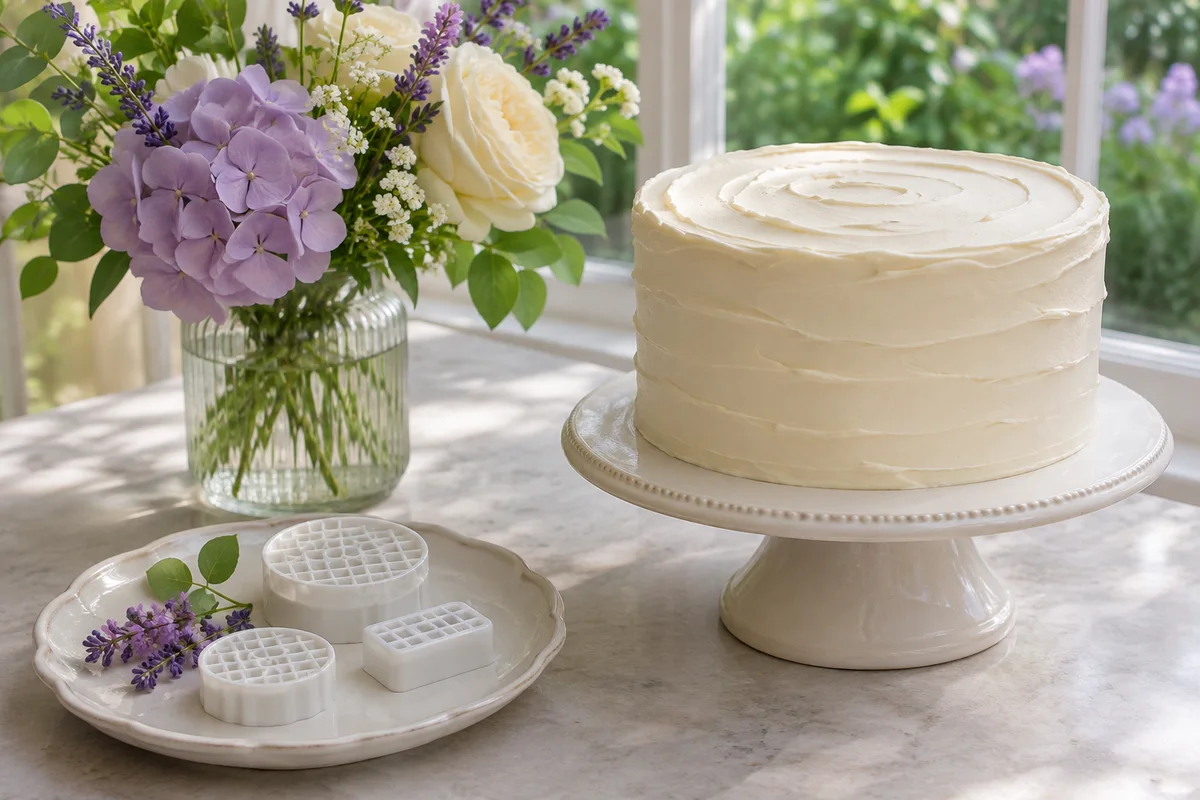
For a cream cake, a small lavender-toned floral accent with a little green can give a garden feeling without overwhelming the finish. For stronger frosting colors, pick a quieter flower palette so the two elements do not compete. Color matching is a design decision, however; never choose a questionable species merely because its shade is perfect.
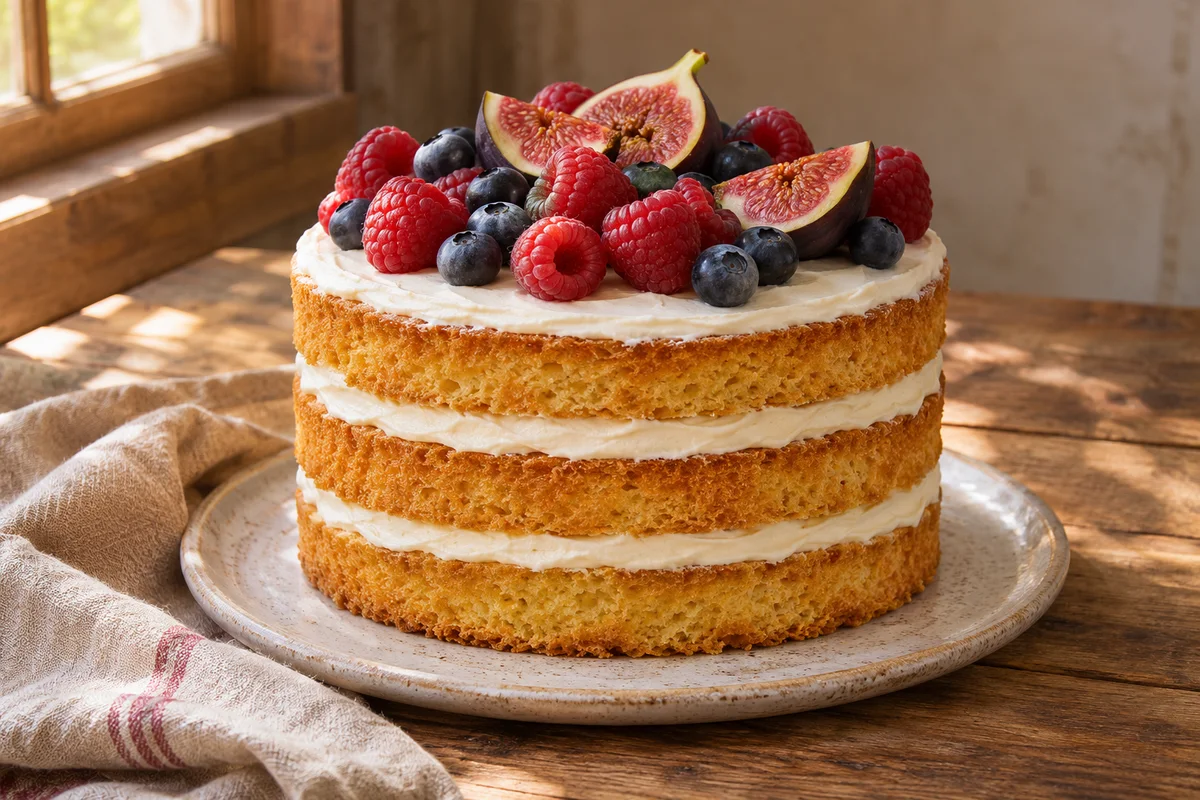
Consider scale as well as color. A large flower may obscure a small cake or leave an awkward gap when removed. Sketch its footprint on paper, or arrange the flowers beside the cake board first. The same planning principles used for a simple naked cake apply: let the cake remain recognizable and leave visible breathing room.
Prepare culinary flowers separately
Keep flowers away from raw eggs, unwashed produce and dirty tools. Use clean hands, a clean tray and utensils reserved for the ready-to-eat decoration. Do not put a bunch down on a worktop that has just held unwashed stems and then place it directly on buttercream.
For suitable edible flowers, follow the supplier's directions. CSU describes gently rinsing fresh flowers with cool running water and refrigerating them until needed. Handle petals lightly so they do not bruise. Let excess surface water drain onto a clean towel; wet petals can mark frosting even when the flower itself is suitable for use.
Remove any parts that the supplier identifies as unsuitable. The edible status of petals does not establish that stems, leaves or every other part should be eaten. Do not improvise chemical rinses, spray cleaners or flower-food solutions. These are not replacements for sourcing a flower intended for consumption.
Keep stems and hardware separate from cake
For decorations needing a stem support, select an insert specifically manufactured for food-contact cake use and follow its instructions. Check the opening, closed end and condition before using it. The insert should contain the stem rather than leaving a cut end poking through into the sponge.
Do not treat an ordinary drinking straw, exposed florist wire, craft foam or florist tape as an interchangeable cake insert. Materials designed for flower arranging have different intended uses. Even a purpose-made insert does not authorize an unsafe flower: the source, species and any petals touching food still need to be suitable.
Plan the position before making holes. Place supports away from the most likely cutting lines, keep them clear of filling seams where practical, and count every nonedible component. Write the count down if someone else will serve the cake. A decoration that is easy to place but hard to find later is a poor choice for a shared dessert.
Place the flowers without damaging the finish
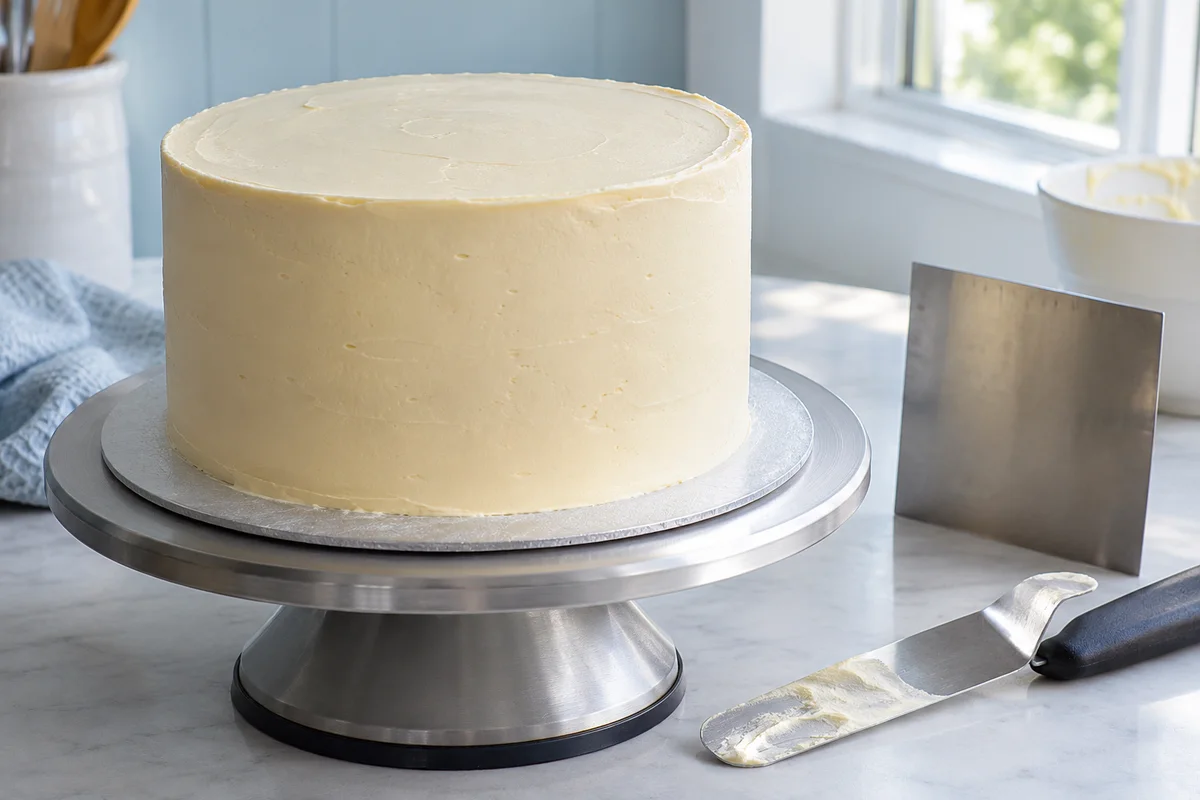
- Finish the cake coating and check that the board is stable. Use the preparation guidance in our smooth-edge guide before adding a delicate final decoration.
- Arrange suitable flowers on a clean tray to settle the balance. Compare the design from the front and from above rather than adjusting it repeatedly in the frosting.
- Add the main accent, then the smallest supporting details. Keep flower heads from pressing deep impressions into soft buttercream.
- Inspect for water, loose pieces and visible hardware. Stop when the composition feels balanced; filling every gap often makes the arrangement heavier.
If a flower leaves a mark, remove it and repair the buttercream with a clean spatula rather than dragging petals across the surface. Repositioning a decoration many times can transfer moisture and turn a small correction into a larger damaged patch. Keep a little clean matching frosting aside for these repairs.
Protect the cake during display and serving
The cake's storage needs come from its ingredients and filling, not its floral theme. A cake containing cream cheese frosting, whipped cream or another perishable component cannot be displayed indefinitely because the flowers still look fresh. Use the most demanding storage requirement among the cake's components.
FoodSafety.gov advises keeping perishable foods refrigerated and limits unrefrigerated exposure to two hours, shortened to one hour above 90°F/32°C. Preparation, transport and display all contribute to exposure; putting the cake back in the refrigerator does not undo unsafe handling. Plan the decoration work within that practical boundary.
Remove nonedible decorations before slicing, count the recovered supports, and move the flowers to a separate tray. Use a clean knife and clean plates. If a section has been in contact with unsuitable plant material, do not assume scraping off the visible decoration makes the affected food acceptable.
Questions worth settling before the event
A rehearsal can be useful without placing uncertain materials on food. Trace the cake's top onto clean paper and arrange the proposed flower positions outside that outline. Check whether a large bloom would shade another detail, whether the front remains visible and whether the server could reach every support. This lets you simplify a crowded arrangement before the cake leaves refrigeration. If the plan depends on an insert leaning sideways, an unstable bunch or leaves spilling onto every cut surface, redesign the composition around a smaller accent. The aim is a decoration that remains easy to identify and manage throughout the event, rather than one that only works from a single camera angle.
- Can a florist bouquet be used if nobody eats it? Keeping flowers out of people's mouths does not prevent contact with frosting. For home decorating, choose culinary flowers or keep the bouquet physically separate from the food.
- Does washing solve the problem? Rinsing suitable edible flowers is a handling step. It does not establish species identity or remove every chemical or biological concern.
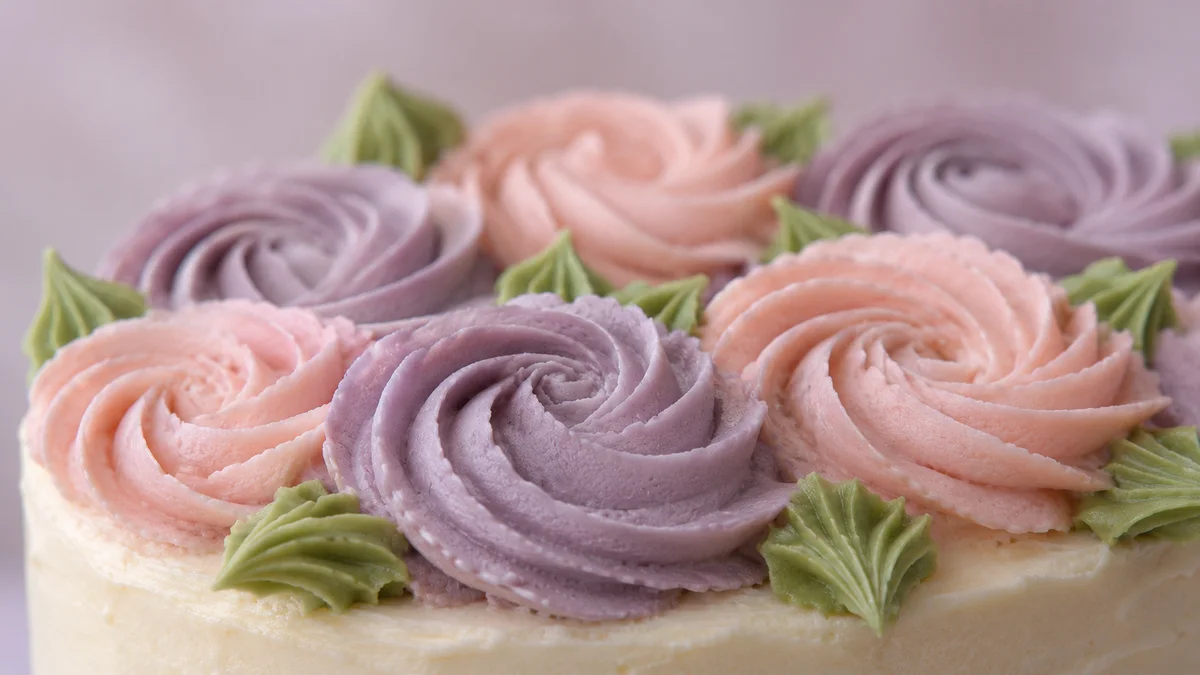
- What if safe flowers are unavailable? Use piped buttercream flowers, food-grade wafer decorations or a separate vase arrangement. Our buttercream rosette tutorial offers a floral shape without introducing fresh plant materials.
Before packing the finished cake, photograph the arrangement and note its removable parts. Give the server a clear, short instruction rather than relying on guests to recognize what belongs on a plate. That final handoff is part of the decoration plan, especially when the baker will not be present when the first slice is cut.