Buttercream piping losing shape can begin in the bowl, inside a warm bag or only after the decoration reaches the cake. Watch when the change happens before reaching for more sugar. A rosette that spreads immediately needs a different investigation from a border that stays crisp until a warm car journey.
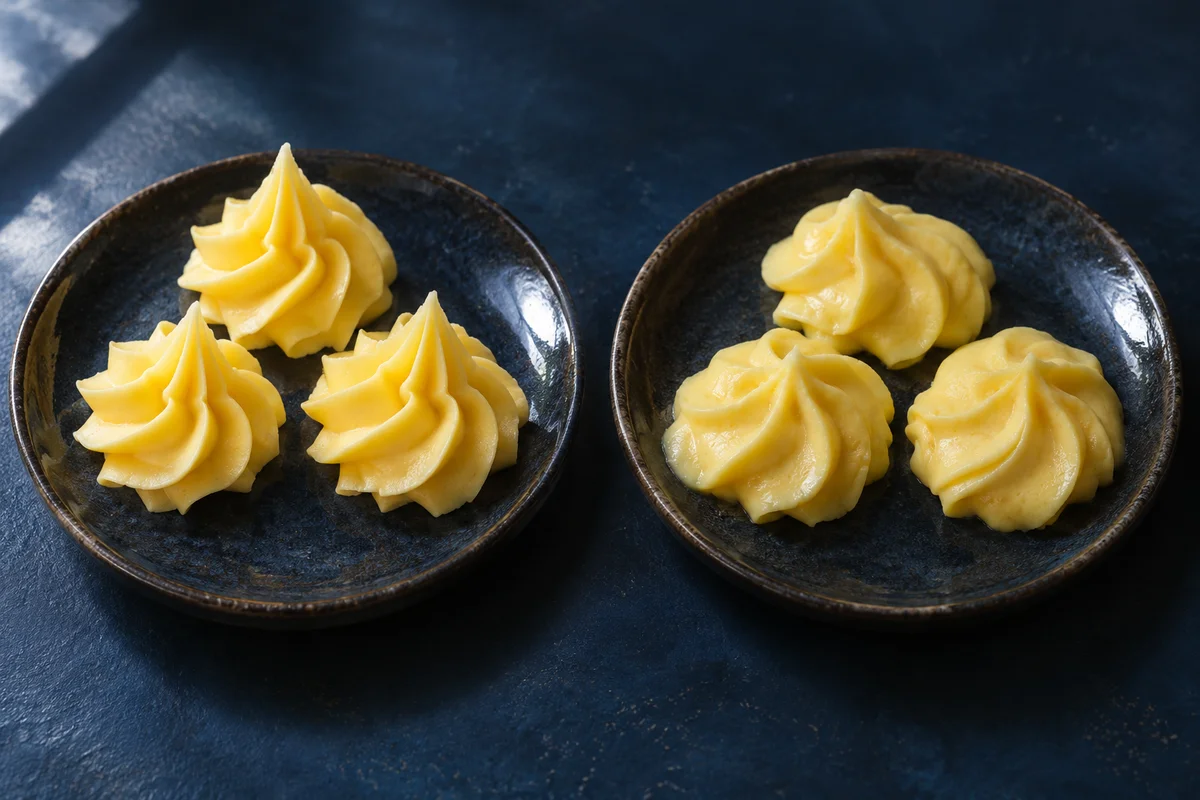
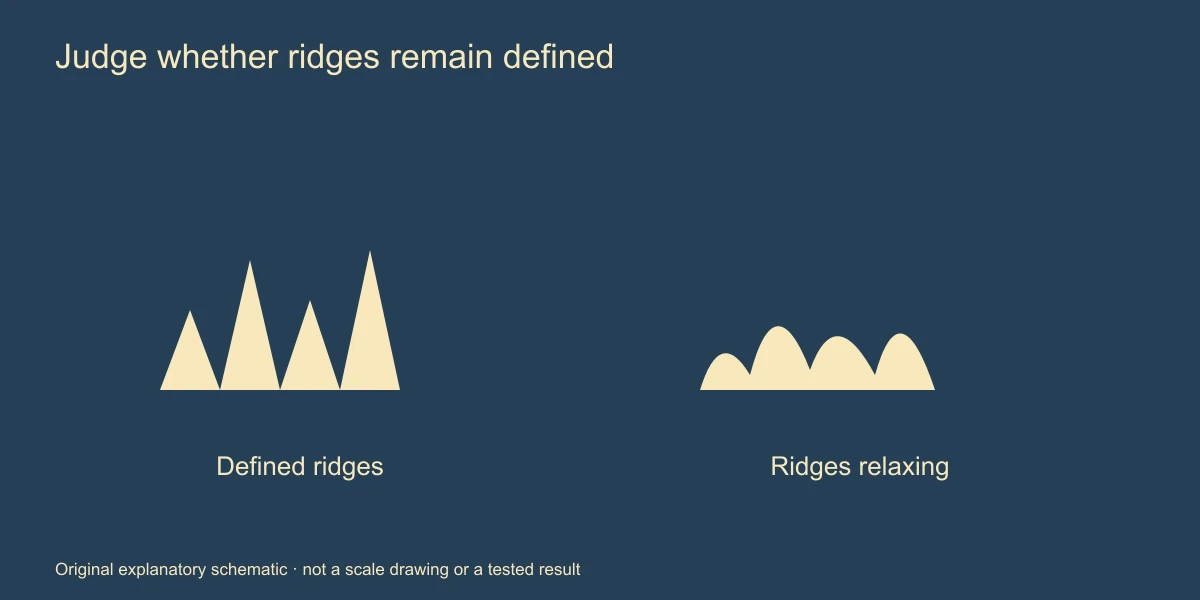
Use one small repeatable shape to diagnose the frosting. Make three stars on a clean practice surface, then inspect their ridges while you prepare another task. This separates the mixture's behavior from the pressure, angle and movement required by a more elaborate design.
Notice when the shape changes
If the ridges disappear as soon as frosting leaves the tip, the mixture may be too soft for that opening and decoration. If only the final few shapes become loose, compare the bag's condition with frosting that has not been held in your hands. If every decoration changes during display, examine the environment and time sequence.
Photograph the first and last test shapes from the same position. A side view reveals leaning height that an overhead view can hide. Compare shapes of similar size; a large mound and a small star do not place identical demands on the mixture.
Do not assume that any loss of detail means a ruined batch. A frosting may remain suitable for a textured coating even when it cannot support a tall flower. The useful question is whether it can do the intended job, not whether every batch can be forced into every possible design.
Identify the formula before adjusting it
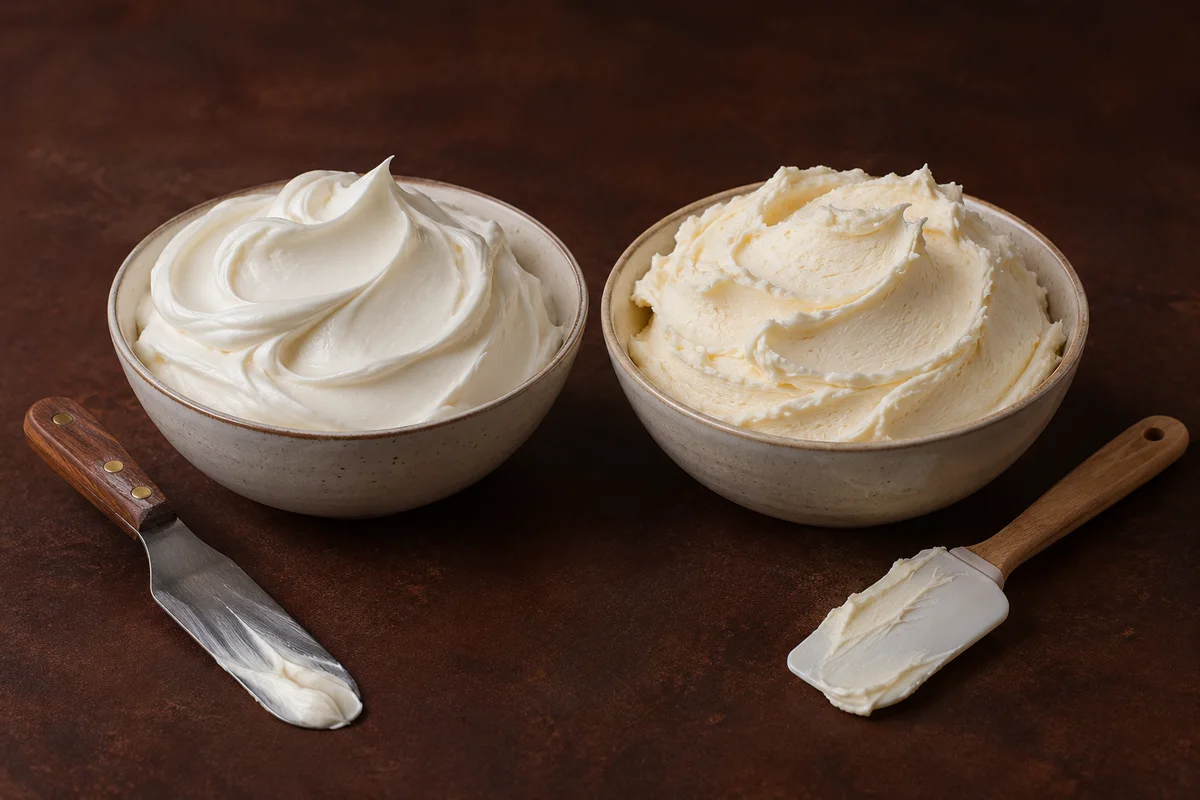
American buttercream, meringue buttercream and cream cheese frosting develop structure differently. An adjustment suitable for one style can create a less pleasant or less controllable version of another. Check the ingredients and recipe before treating the frosting as a generic sweet paste.
For American buttercream, review the butter condition, sugar measurement and added liquid. For meringue buttercream, temperature and the condition of the emulsion may be more relevant than a shortage of powdered sugar. Cream cheese frosting also needs realistic decoration choices rather than repeated additions intended to imitate a stiff decorator frosting.
King Arthur Baking's broken-buttercream guidance discusses temperature-related problems and recovery. Use the method that matches the actual formula. Our buttercream comparison explains why the two common styles should not be adjusted identically.
Check warmth before changing the recipe
Butter-based frosting responds to warmth. A suitable bowl can become softer after prolonged mixing, and a small working portion can warm more quickly in a piping bag. The bag may therefore behave differently from the reserve even though both started as the same batch.
Feel the outside of the bag and inspect the frosting directly. Is it unusually slack compared with the unhandled reserve? Are the first shapes crisp while later ones become glossy and broad? Those observations provide a reason to use smaller portions and restore appropriate working conditions.
Chilling until frosting becomes very hard is not the final test. A hard cold star can look impressively sharp, then lose its form again as it reaches the actual decorating environment. Reassess at a realistic workable condition, following the recipe's handling and storage requirements.
Make the bag easier to manage
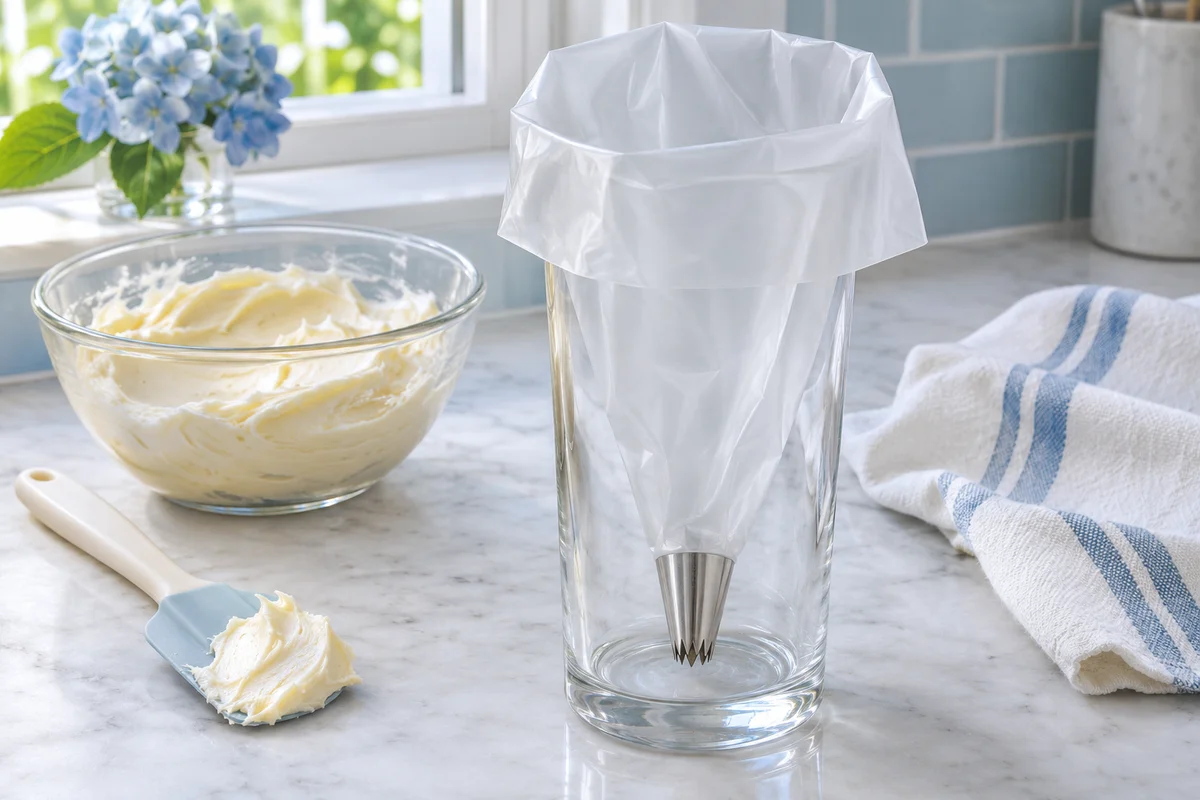
A very full bag asks your hand to squeeze a large mass while also controlling the tip. If you grip it near the middle with both hands, the frosting can warm and pressure can become uneven. Use a modest fill, twist the top securely and apply pressure from above the working frosting.
Let the other hand guide the tip rather than squeezing the lower bag continuously. Keep the tip close enough to the surface for the intended shape. Lifting too high while squeezing can stretch a decoration upward, making a technical movement issue look like a frosting-strength problem.
Read the bag-filling guide for setup and air control. If flow suddenly stops or sputters, inspect the tip and bag before increasing force. A blocked opening can produce irregular shapes even when the frosting has adequate structure.
Match the texture to the shape
A shallow star needs less unsupported height than an upright flower. A low rosette depends on a continuous ridged spiral, while a shell border combines a raised head with a drawn-out tail. They cannot all be judged from a single tall spoon peak in the bowl.
Test the decoration at the actual size you plan to use. Scaling a small flower up increases the amount of frosting and changes the balance of the shape. If a miniature test works but the full-size decoration leans, simplify the size or arrangement rather than assuming more mixing must solve it.
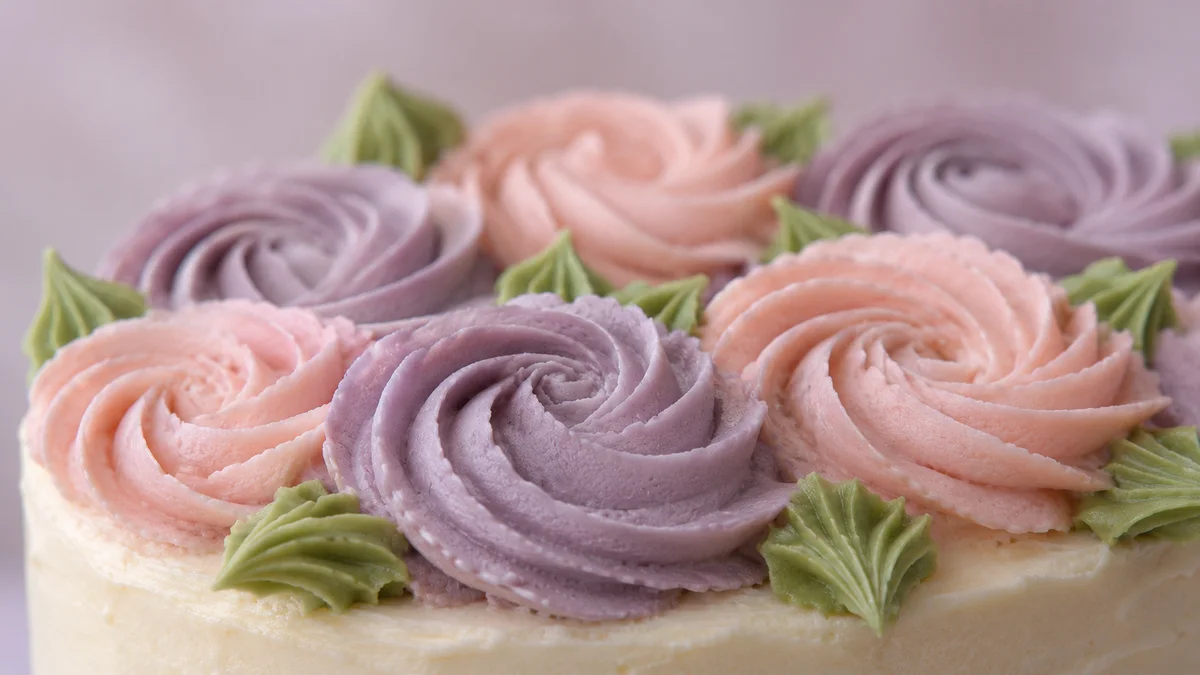
Use the rosette technique to distinguish a low spiral from a tall swirl. A heavy center caused by pausing too long can make the finished flower look collapsed even when its outer ridges remain reasonably clear.
Make a controlled adjustment
- Keep a reference spoonful and identify the frosting style and the moment detail is lost.
- Check obvious temperature, bag-filling and tip problems before adding ingredients.
- Adjust a measured sample only by a method suitable for the recipe.
- Pipe several equal shapes at the intended scale and observe them under realistic working conditions.
- Apply the successful change to the remaining batch carefully, recording what was changed.
If adding a permitted dry ingredient to an American formula is appropriate, account for the change in sweetness and spreading resistance. If the frosting is mainly warm, first correct that condition. If it is a meringue frosting with an emulsion problem, powdered sugar may not address the mechanism at all.
Stop making changes when the batch no longer tastes or handles appropriately. A simpler decoration can be the better outcome. An acceptable textured coating is more useful than a very sweet, resistant mixture created solely to preserve an ambitious flower design.
Use a focused comparison
| Pattern | What to compare | Practical response |
|---|---|---|
| Immediate flattening | Recipe use and working texture | Test a suitable adjustment or a shallower shape. |
| First shapes crisp, later ones soft | Handled bag and protected reserve | Use smaller refills and improve bag control. |
| Only large shapes lean | Actual size versus small practice sample | Reduce unsupported height or simplify the design. |
| Detail changes after transport | Display conditions and movement | Improve environment and support rather than only mixing longer. |
Repair selectively, not repeatedly
A small practice comparison can clarify a confusing result. Pipe a row of three low stars and a row of three taller swirls from the same working bag. Keep the base diameter similar and avoid changing the frosting between rows. If the stars retain clear ridges while the taller swirls lean, unsupported height may be the important difference. If both rows flatten, return to the mixture and its temperature. If only the later shapes suffer, compare the handled bag with a fresh refill. This exercise narrows the next decision without claiming that one shape proves every decoration will work. Photograph the rows before removing them so you can compare a later attempt using the same visual evidence.
For a few softened details, remove the affected decoration with a clean tool if the base can tolerate it. Reassess the frosting before replacing the shape. Repeatedly piping the same unstable mixture onto the same patch creates more damage without providing new information.
If the base coating is also soft or moving, treat that issue first. Do not place a firm replacement flower on a surface that cannot hold it. Keep scraps and touched decorations out of a clean serving reserve, and avoid treating all recovered frosting as automatically reusable.
Protect the finished result
Plan the final display away from direct sun and unnecessary warmth. For cakes with perishable ingredients, follow FoodSafety.gov's handling guidance and the recipe's refrigeration needs. A decoration retaining its outline does not prove the dessert has been held safely.
Before the next project, note the frosting formula, room conditions, bag fill and size of the attempted shape. The most useful correction is the one linked to a specific observation. Practicing a consistent low shape under controlled conditions gives you a better foundation than endlessly stiffening a batch without knowing why its details changed.