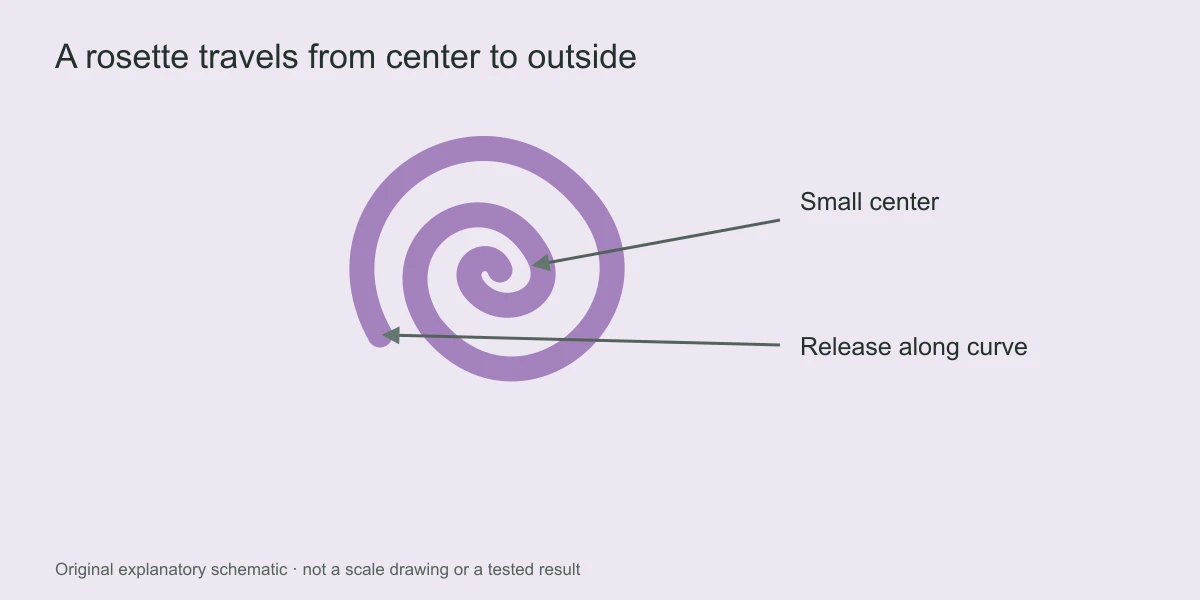
Buttercream rosettes begin at the center and open outward in a low spiral. They look different from the tall swirl often piped onto a cupcake: instead of building height through stacked circles, you travel around a small center and finish along the outside curve. That distinction makes the movement easier to learn and the finished flowers easier to arrange.
A neat rosette depends on a continuous ribbon, a steady bag position and a deliberate release of pressure. Choose a modest practice size before covering a whole cake. Learning to repeat one flower gives you a useful decorating skill without the pressure of correcting a complete floral design at once.
Prepare a small, workable setup
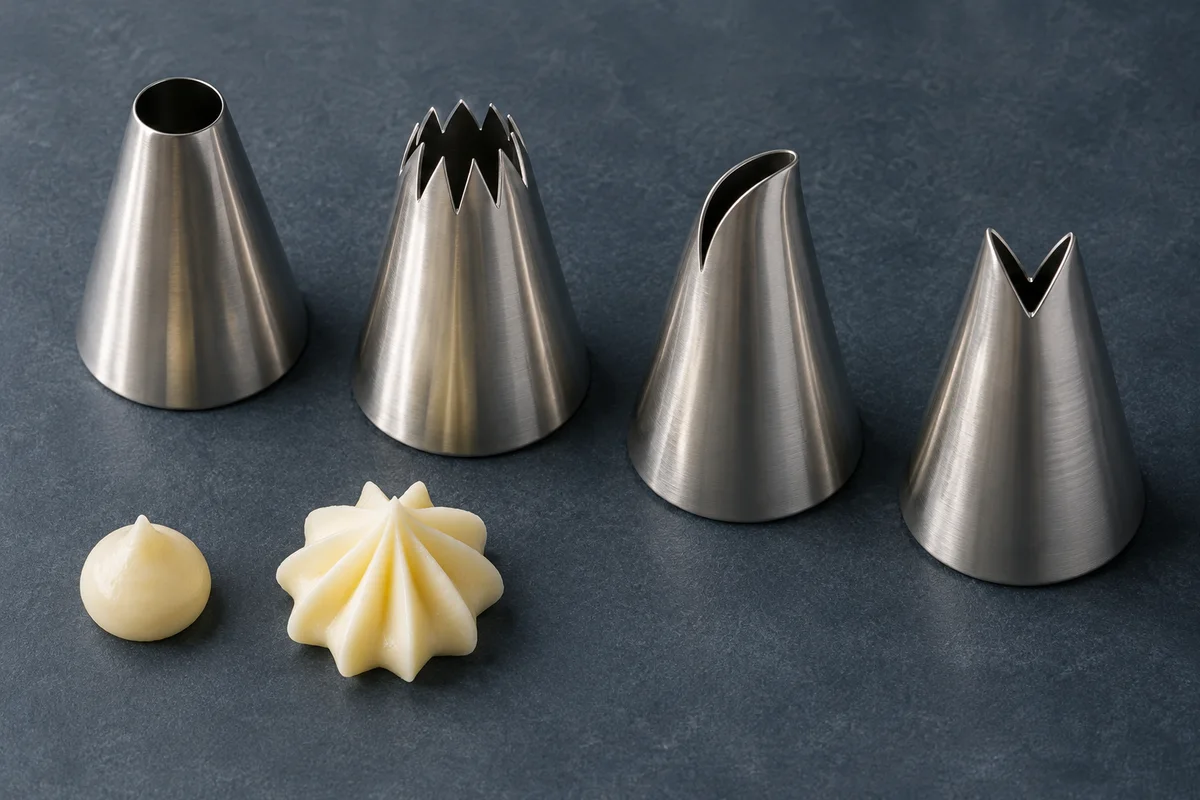
- A large star tip suitable for rosettes, such as an open-star 1M-style tip.
- A compatible piping bag and optional correctly sized coupler.
- A spatula and a small amount of smooth decorating buttercream.
- A stable tray with a clean practice surface.
- A cake or cupcake with a prepared frosting surface when you are ready to decorate.
Different star tips make different ridges. A closed-star opening may produce a more folded effect than an open star of similar size. Check the actual tip rather than expecting every product with a familiar number to behave identically. Our piping tips guide connects those openings with the patterns they can form.
Fit the tip securely before filling the bag. Use enough frosting for several attempts, with plenty of room to twist the top closed. An oversized bag packed to the top asks you to manage more weight and pressure than this small movement requires.
Look for ridges that hold without tearing
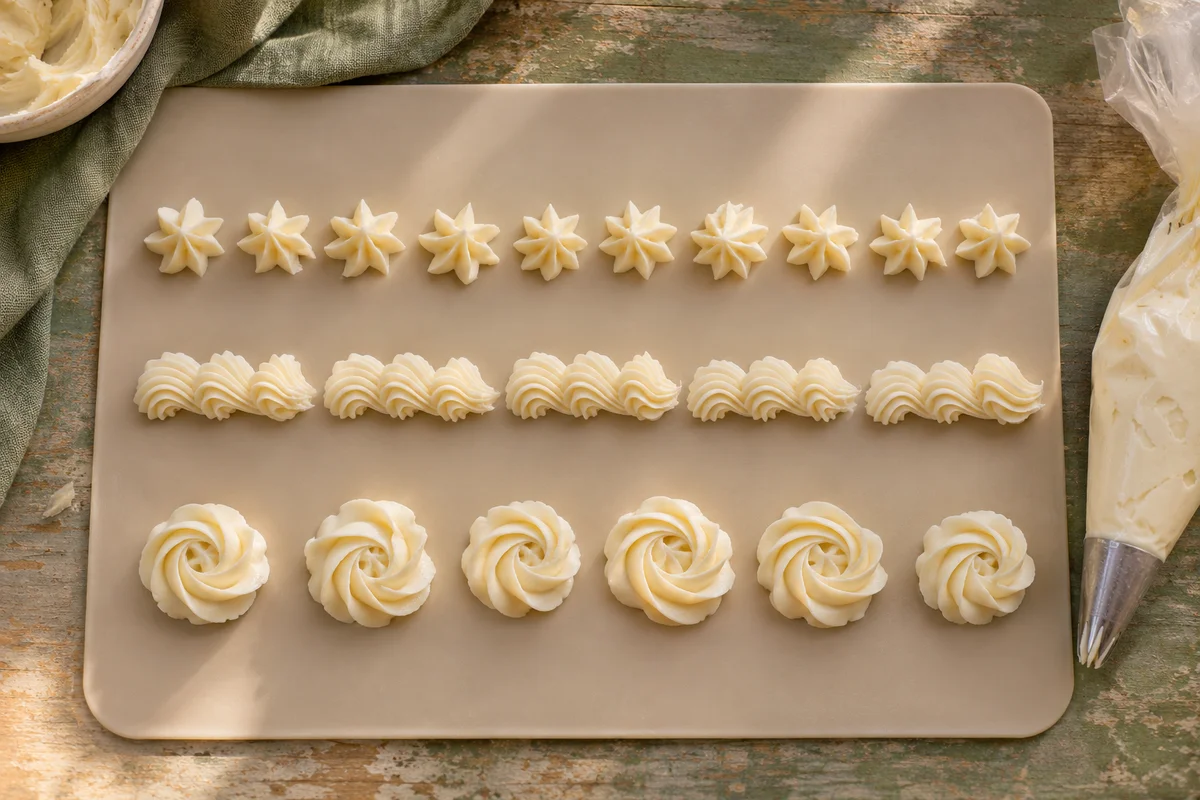
Pipe one short test ribbon before beginning a flower. The star grooves should remain visible while the frosting flows without an uncomfortable squeeze. If the ridges quickly merge into a smooth mound, examine the frosting's warmth and texture. If the ribbon breaks or looks ragged, check for trapped air, an obstructed tip or frosting that is difficult to extrude.
Do not change the entire batch after one unsuccessful shape. Test a small portion and review the recipe's own consistency guidance. A decoration that softens because the bag warmed in your hands calls for a different response from frosting that was too loose when first mixed.
Wilton's vanilla buttercream instructions identify medium consistency as suitable for rosettes made with that formula. Use that as context, rather than a promise that every frosting called medium will behave the same way. Temperature, ingredients and the chosen tip still affect handling.
Let one hand provide pressure
Push frosting toward the tip and twist the bag above it. Hold the twisted section with your upper hand so pressure travels down through the frosting, rather than escaping from the open end. Use the other hand mainly to guide the bag's position.
Start with the bag approximately upright over a horizontal surface. Keep the tip just above that surface, close enough for the ribbon to settle without stretching. If you tilt the whole bag toward one side during the circle, the flower can become heavier on that side.
Give your elbow space to move. A cramped position encourages you to twist only your wrist until the bag leans unexpectedly. Before squeezing, trace the intended circle in the air to check that the movement feels comfortable from beginning to end.
Pipe from the center outward
- Position the tip over the center of the practice space and begin a gentle squeeze.
- Form a small central star without waiting long enough to build a tall mound.
- Continue squeezing as you move around that center in a smooth circle.
- Keep the outer ribbon close to the center and maintain a similar tip height.
- As you complete the outer curve, reduce pressure and stop squeezing.
- Move the tip away along the curve, then lift clear of the finished flower.
Clockwise and counterclockwise movements can both work. Choose the direction that lets you move smoothly, then keep it consistent for a row of practice flowers. Changing direction repeatedly adds a variable without improving the basic exercise.
A compact rosette may need only a simple wrap around the central star. More turns make a wider flower, and the frosting still needs somewhere to settle. If you circle directly above the previous ribbon instead of traveling outward, you are making a taller swirl.
Release before lifting
The final tail is a pressure problem as much as a movement problem. Lifting while still squeezing draws frosting upward into a point. Practice a short curved line, stopping pressure before the tip leaves the surface. This isolates the ending without requiring you to pipe a complete flower each time.
A small tail following the outer curve is easier to blend into an arrangement than a tall spike. Avoid digging the metal tip back into the completed flower to flatten it. That can damage several ridges while trying to repair one tiny detail.
Clean the tip when frosting builds up around its outside. A smear attached to the metal may drag across the next rosette even if your pressure is steady. Set the bag down with the opening protected rather than resting the working end directly on the counter.
Plan the flowers before piping the cake
Choose a repeated flower size and sketch the arrangement loosely on paper. For a top border, think in terms of evenly spaced centers rather than squeezing flowers into whatever gap remains. On a cupcake, start the rosette far enough from the edge that the outer ribbon has room to land.
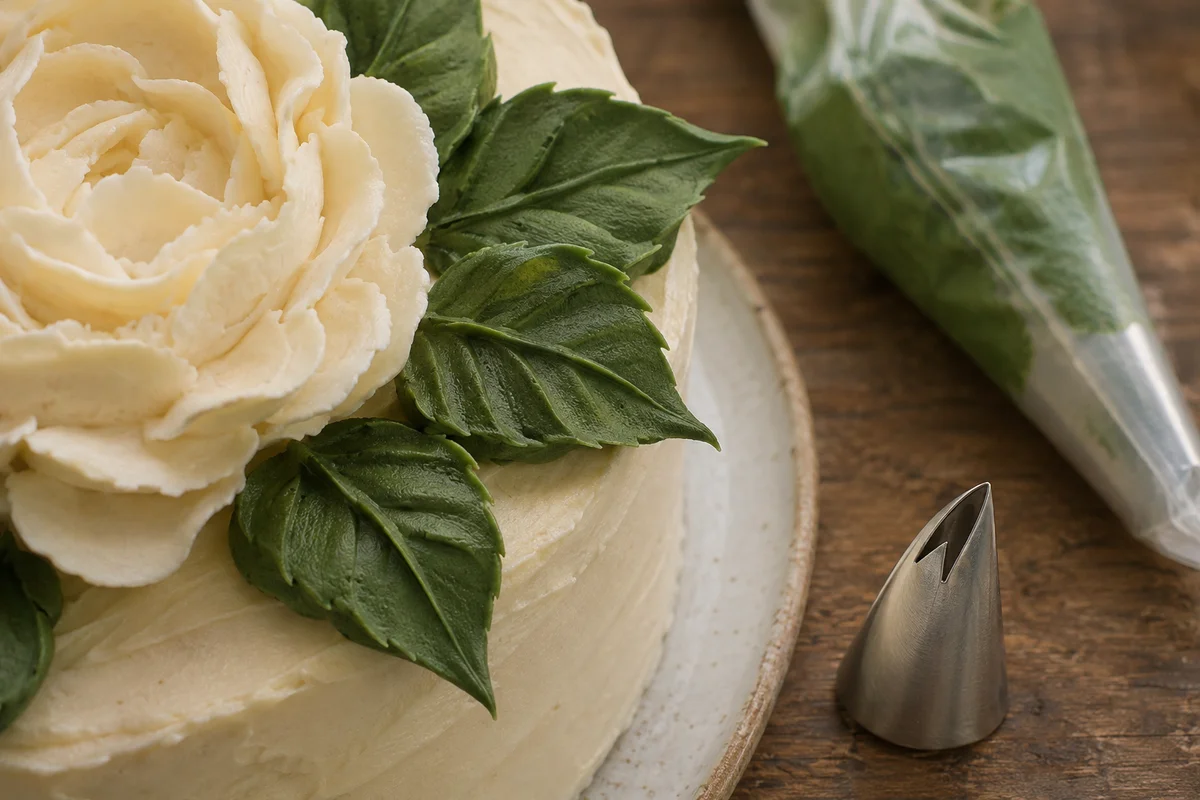
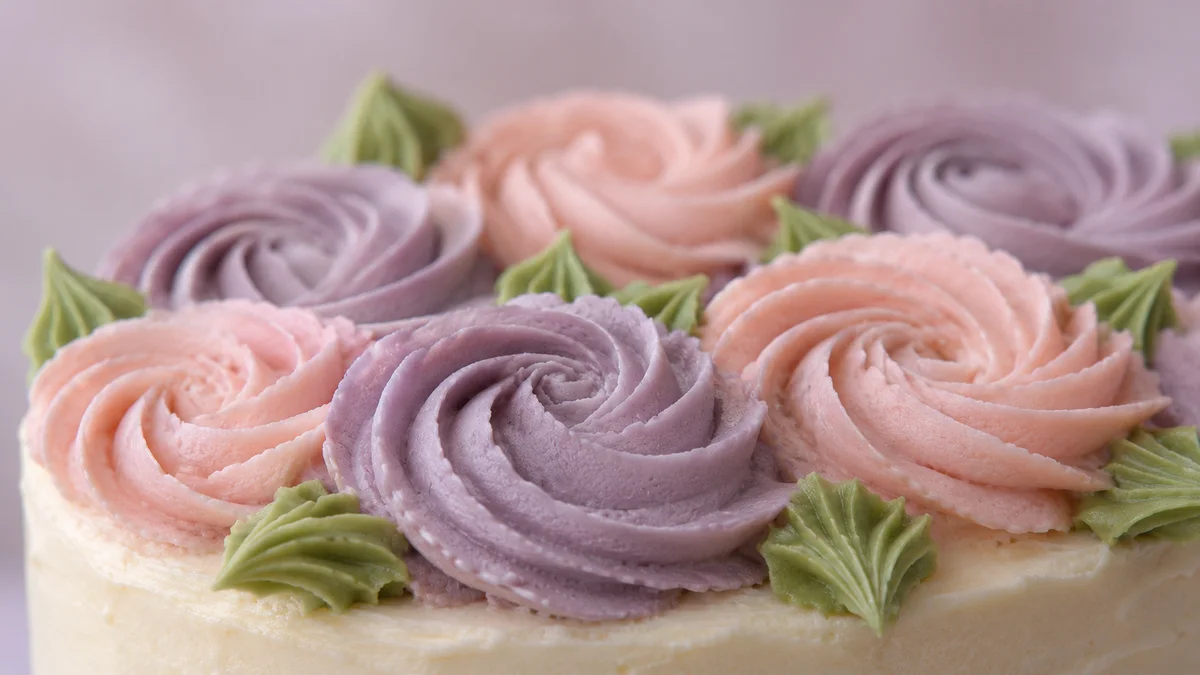
For a simple example, plan a group of three rosettes near one edge of a cake, with a few buttercream leaves extending outward. Pipe the flowers first, then use the leaves to connect the group. Keep some undecorated frosting visible so the shapes can be read separately.
A vertical side presents additional attachment and gravity challenges. A successful flat practice flower does not prove that a particular frosting will stay secure on a cake's side. Begin with top-facing decorations, and check the frosting and prepared surface before attempting an all-over design.
Use the shape to choose one adjustment
| Result | First thing to observe | Next practice attempt |
|---|---|---|
| Tall center | How long the initial squeeze lasts | Begin the circle sooner. |
| Heavy outer edge | Whether the tip leans outward | Keep the bag upright. |
| Pointed ending | Pressure during lifting | Release before moving away. |
| Soft, merging ridges | Frosting warmth and consistency | Reassess a small sample. |
| Interrupted ribbon | Air, obstruction or inconsistent pressure | Test a short continuous line. |
Compare a row from above and from the side before changing anything. The overhead view reveals spacing and roundness; the side view reveals unnecessary height. Take a quick photograph if turning the tray makes it hard to remember the differences.
Read a small practice group
Suppose the first two flowers are compact and the next three spread wider. Compare their central stars before deciding that your tip is unsuitable. A larger central star can push the whole flower outward, even when the outer circle feels similar. Repeat a smaller starting squeeze while keeping your hand speed unchanged.
If every center looks similar but the last flowers lose their grooves, pause to check the frosting in the bag. Make a short ribbon on the practice patch and compare it with the earlier one. That observation separates a change in material from a change in your movement.
Keeping those two questions separate makes practice less frustrating. You are either adjusting the path or returning the frosting to a usable state; you do not need to reinvent the whole technique after every imperfect flower.
Build consistency before adding complexity
Try twelve flowers in three rows. Concentrate on bag angle for the first row, pressure for the second and the clean ending for the third. This is a suggested learning exercise, not a claim of a tested training method or a guarantee about how quickly a skill develops.
Once the flowers look recognizably similar, change only their size or color for the next board. A focused piping practice routine makes improvement easier to see than decorating an elaborate cake with several new techniques at once.
If the frosting itself has become difficult to handle, stop practicing and review shape loss in piped buttercream. Returning to a workable ribbon is more productive than trying to correct every flower with a different grip.