A piping tips guide is most useful when it connects the shape of an opening to the movement of your hand. A star tip does not automatically make a rosette, and a petal tip cannot produce a rose without changes in angle and pressure. Start with a few distinct openings, learn what each one extrudes, then add tools when a project actually needs them.
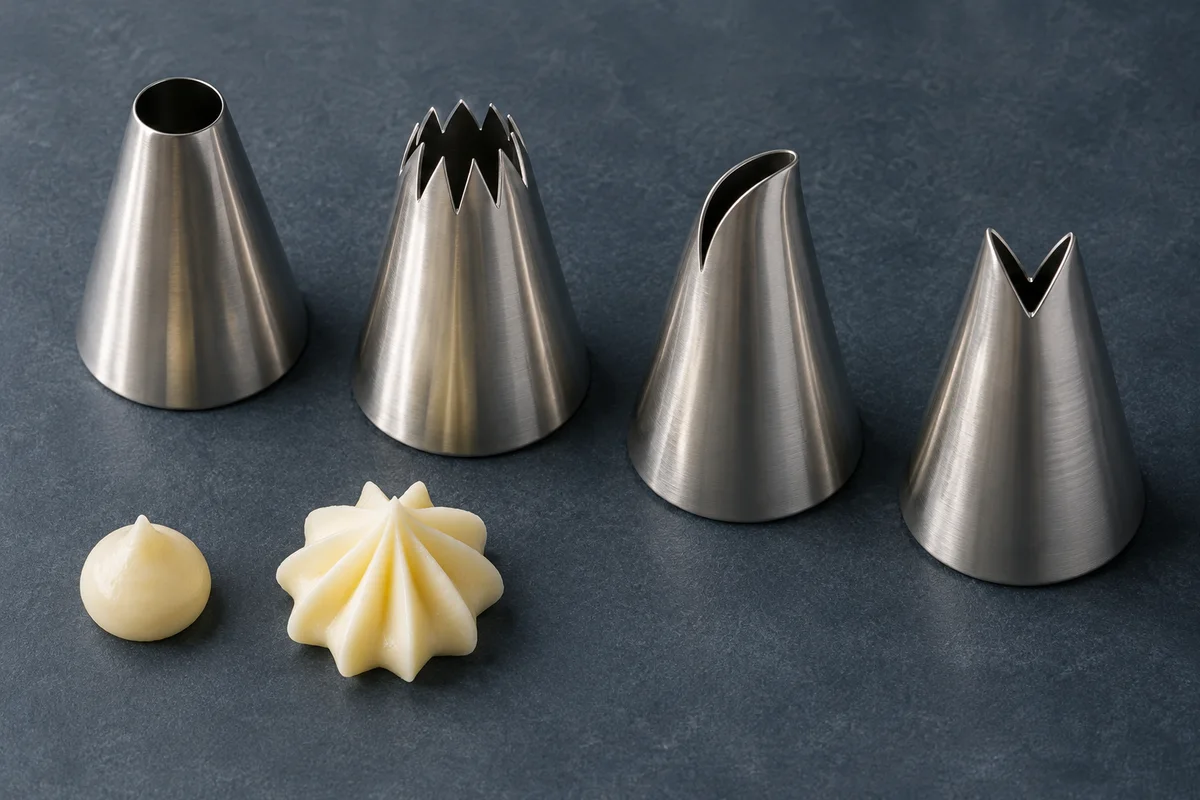
Tip numbers are not a universal sizing system across every manufacturer. Names such as round, open star, closed star, petal and leaf describe families of openings; the size and details still vary. Look at the actual opening and the maker's examples before buying a replacement for a tool shown in a tutorial.
Round tips create a continuous line
A round opening extrudes a smooth strand or dot without ridges. Small openings suit fine lettering and delicate dots, while larger ones can make domes, beads, filling dams and broad lines. The final result depends on how long you squeeze, how close the tip sits to the surface and whether you move while applying pressure.
For a bead, keep the tip in one place and release pressure before pulling away. For a line, begin flowing frosting and guide the strand along the intended path. Moving too fast stretches and thins the strand; pausing while squeezing produces a thick spot. Practice straight lines before trying to write on a finished cake.
A small round tip also reveals texture problems quickly. Tiny particles or dried frosting can interrupt the flow. Check the opening rather than forcing the bag harder, which can send an unexpected burst of frosting onto your work.
Open and closed stars produce different ridges
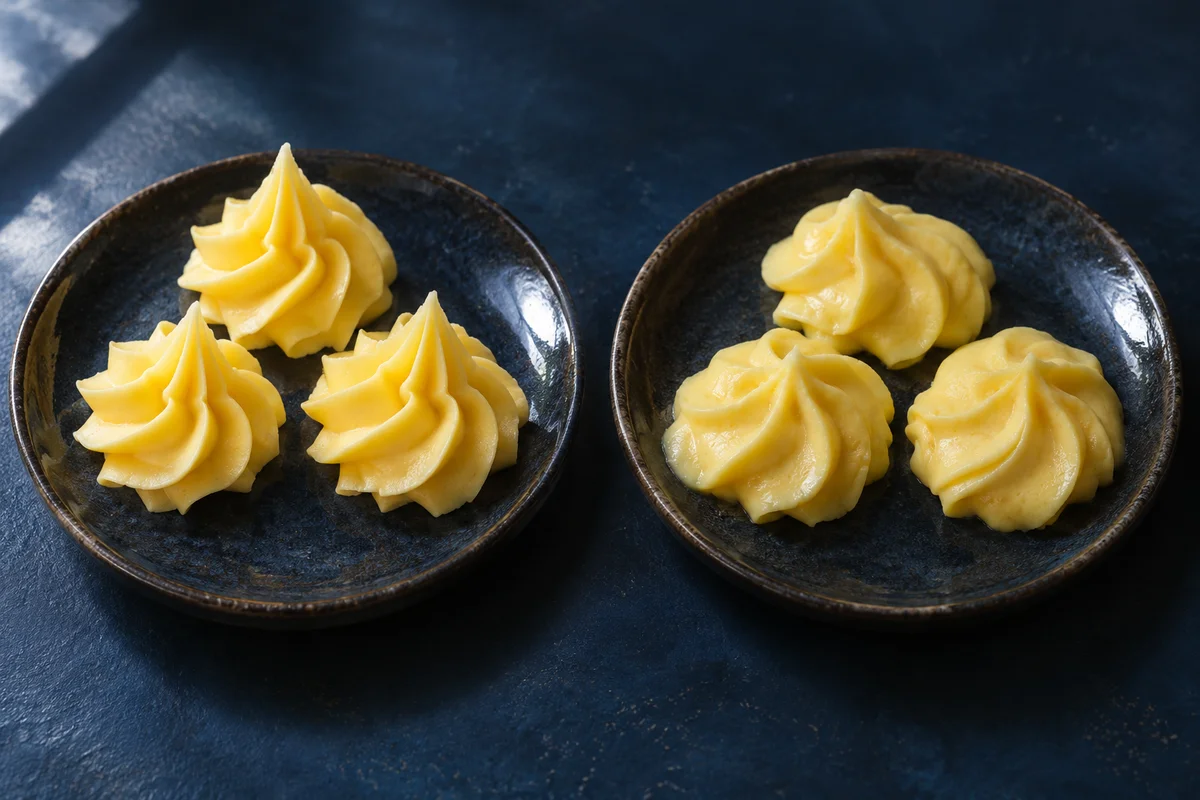
An open-star tip has visible points around an opening that stays relatively unobstructed. A stationary squeeze forms a star, a moving squeeze forms a ridged ribbon, and a controlled circular movement can form a rosette. Large open stars are a practical starting point for decorating cupcakes because their ridges are easy to observe.
Closed-star openings turn inward more strongly. They can produce more folded, closely defined effects, but the exact shape varies by design. Do not assume that two similarly sized tips will create interchangeable flowers. Pipe a sample before planning a whole cake around an unfamiliar opening.
Keep a small test board beside the cake when switching tips. One short line and one stationary star tell you whether the frosting flows through that particular opening. If the ridges disappear almost immediately, review why piped decorations lose their shape rather than blaming the tip alone.
Petal and leaf tips have an orientation
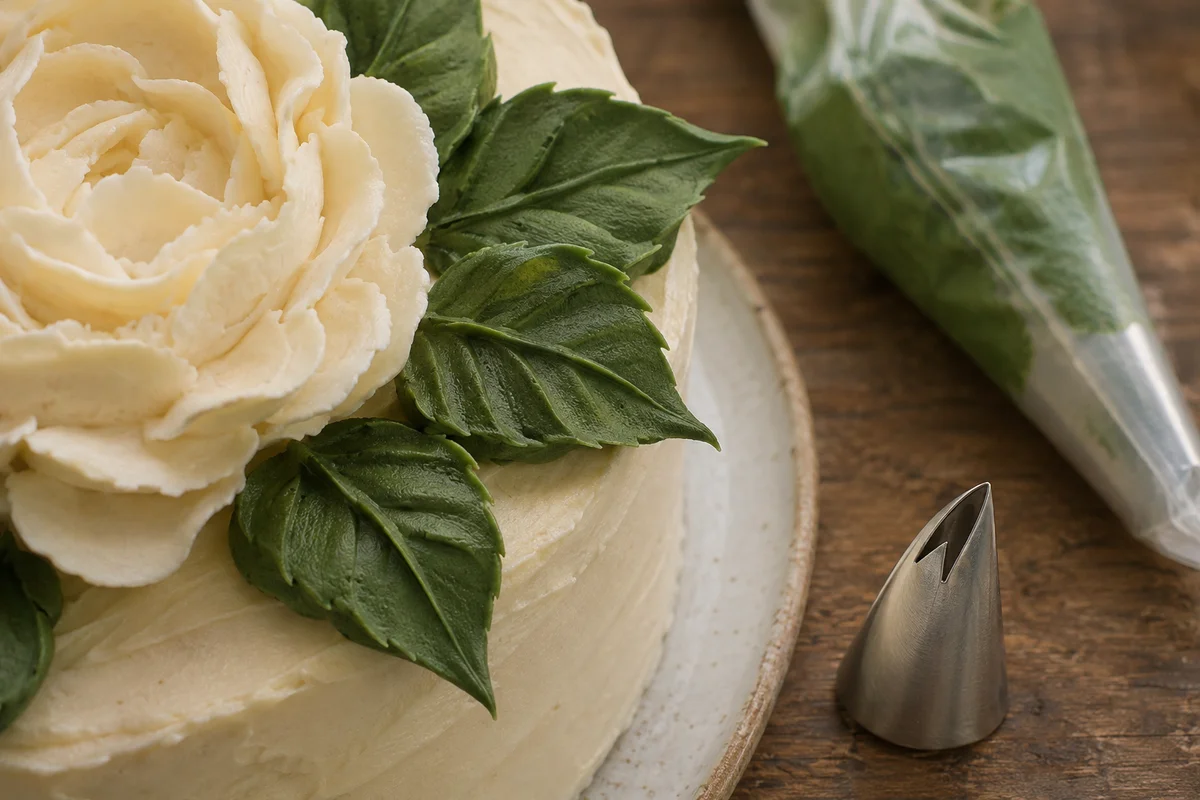
A petal tip has a flattened opening with a wide end and a narrow end. That asymmetry creates a thicker base and a thinner petal edge. Rotating the opening changes which edge sits against the cake or flower support. A petal tutorial should therefore explain the opening's position, not just say to hold the bag at an angle.
A leaf tip forms a folded ribbon that narrows as you release pressure and move away. Depending on the design, its opening may look like a V or have a different divided shape. Study the manufacturer's orientation instructions for your actual tip; turning the opening a quarter turn can change the leaf's appearance substantially.
Learn to identify the center ridge and finishing point before arranging leaves around flowers. A crisp leaf is a useful exercise in controlled release. Our leaf piping tutorial explains how changes in distance and pressure influence that taper.
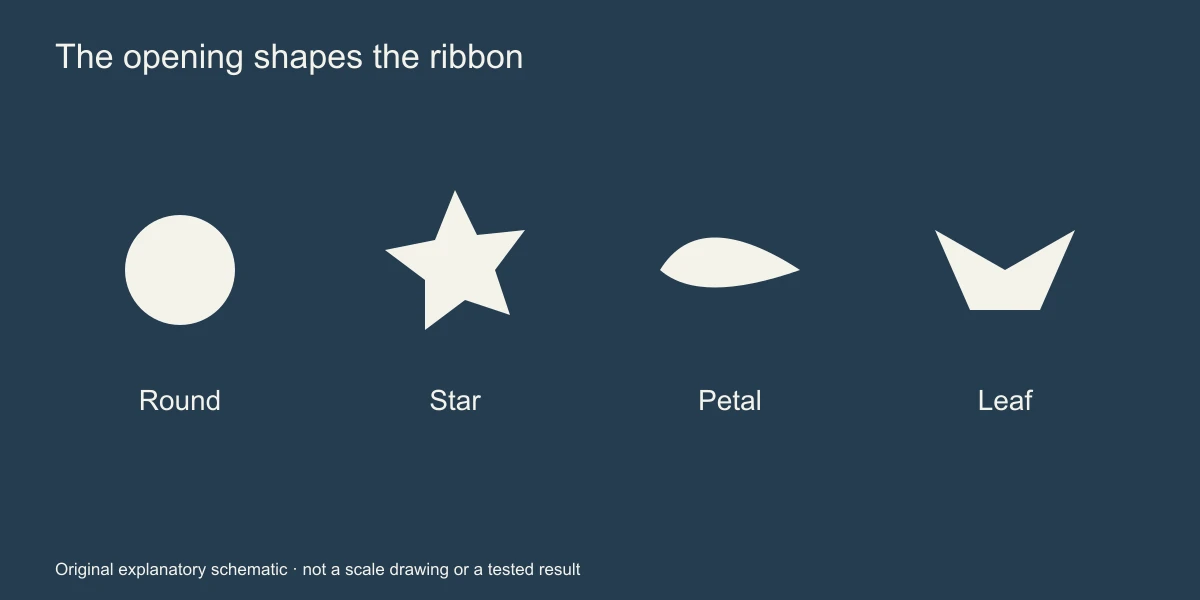
Match the opening to the task
| Tip family | Typical effect | First practice shape |
|---|---|---|
| Round | Smooth lines, dots and beads | A row of equal dots |
| Open star | Defined ridges, shells and rosettes | A stationary star, then a shell |
| Closed star | More folded decorative ridges | A small squeeze-and-release flower |
| Petal | Thin-edged petals and ruffles | A short curved petal |
| Leaf | Ridged, tapered leaves | A leaf with a clean point |
These are starting uses, not exclusive rules. A large round tip can pipe a filling dam; the same tip can also create a broad decorative dot. Choose the smallest set that covers your intended movements instead of treating every pictured effect as a reason to purchase another tool.
Build a small, purposeful starter kit
- One medium round tip for lines, dots and simple filling work.
- One open-star tip for stars, shells and center-out rosettes.
- One leaf tip if floral arrangements are part of your immediate plans.
- A compatible piping bag, with a coupler only where its size matches the tips.
- A small cleaning brush and a container that protects the openings from bending.
Add a petal tip when you are ready to practice flowers that use it. A specialist basketweave or multi-opening tip is useful for its own projects, but it does not replace control of basic pressure and placement. A dozen unfamiliar tips can make it harder to recognize which variable caused a disappointing result.
Fit the tip and bag together properly
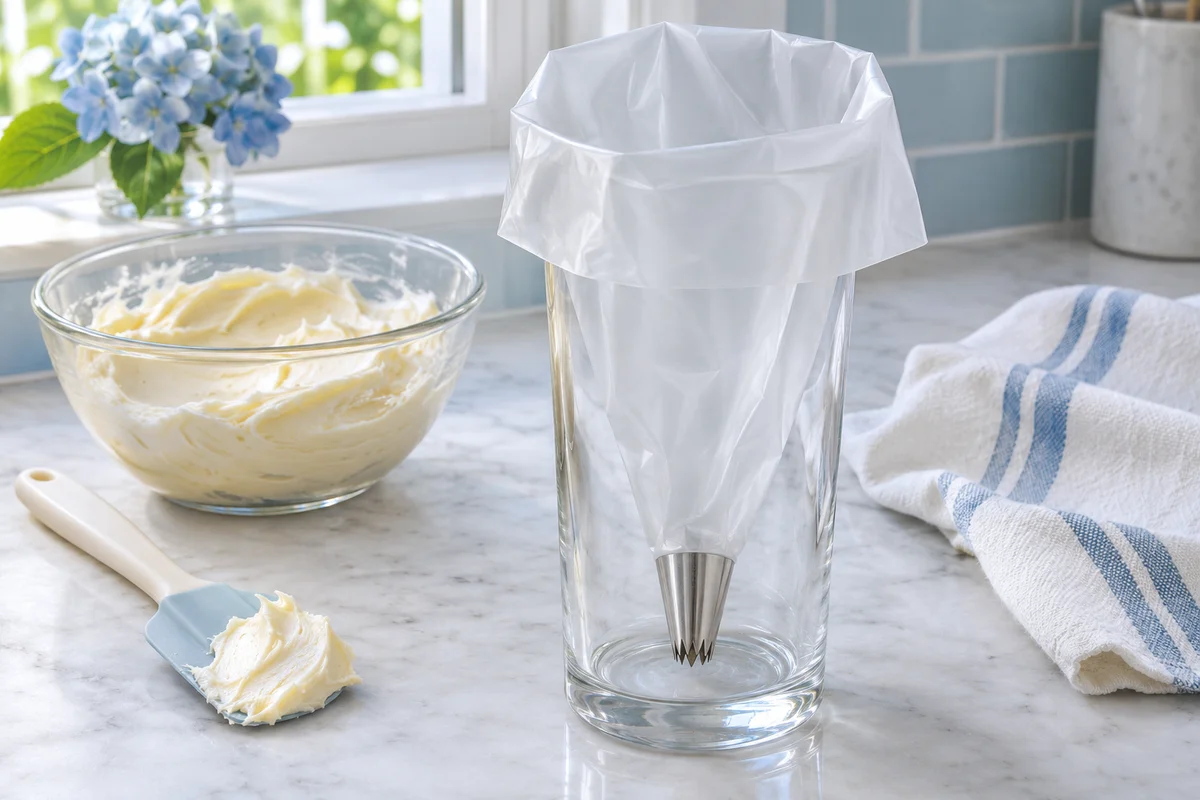
A tip should sit securely in the bag without falling through the cut opening. Cut conservatively, fit the tool and enlarge the opening only if necessary. If you remove too much bag material, changing to a larger hole does not repair the fit; use another bag or a correctly sized fitting system.
A coupler lets you exchange compatible tips while keeping the same bag of frosting. Its base sits inside the bag, and the outer ring secures the tip according to the manufacturer's directions. Large tips may need a larger coupler or direct fitting. Do not force a ring over an incompatible shape.
Fill the bag modestly and twist the top closed. The piping bag filling guide explains why frosting outside the cuff and pockets of air near the tip make control harder. Keep the opening clean when setting the bag down between attempts.
Practice one variable at a time
- Pipe a short line to feel the resistance of the frosting through the opening.
- Repeat one simple shape several times using the same bag angle.
- Change the length of the squeeze while keeping the movement similar.
- Compare the results from above and from the side.
- Record the change that helped before moving to another tip.
For example, use the open-star tip to make six stars. If some are taller, compare how long you remained stationary while squeezing. Then use that same tip for a shell border, where the finishing tail introduces another movement. Progressing this way makes the tool's role easier to understand.
Explore three effects with one opening
Suppose you have one large open-star tip and want a coordinated cupcake display. Make one cupcake with a stationary star, a second with a low rosette and a third with a taller swirl. The opening stays the same, but the path changes from still, to circular and outward, to circular and upward. Compare those movements before deciding that the set needs more equipment.
Now try changing only the frosting color while keeping the same rosette movement. The shapes should still look like a family because their size and ridges repeat. For a restrained celebration display, that consistency can be more useful than placing a different tip pattern on every cupcake.
This exercise also gives you a buying criterion: purchase another tip when you can describe a specific effect your current opening cannot make, rather than because the larger set contains more pieces.
Clean and protect the openings
Remove the tip from the bag or coupler before washing. Clean inside the narrow opening with a suitable brush, following the product's care instructions, and rinse away frosting trapped around the seams. Do not push a sharp improvised object through a delicate point: bending the metal changes the pattern it produces.
Let tips dry thoroughly before storing them in a clean container. Keep the working ends protected from heavier utensils that can crush their points. Before the next decorating session, inspect each opening in good light. A damaged tip or a trace of hardened frosting can interrupt an otherwise steady line.
Once you can repeat a star, a line and a clean release, choose a project that uses those movements. Buttercream rosettes are a useful next exercise, while a broader practice routine helps you compare several shapes without committing to a whole cake.