A polished dessert plate usually has fewer components than it first appears to have. One clear main dessert, a controlled amount of sauce and a garnish with a purpose create a stronger result than several unrelated sweets arranged around the rim. Dessert plating techniques are most useful when they make the dessert easier to understand and more pleasant to eat.
Start with the dessert you actually have. A soft pudding, a crisp tart and a slice of layer cake need different support and different amounts of surrounding space. You do not need a restaurant's equipment to improve their presentation, but you do need to think about the plate, the serving movement and how the components behave together.
Choose a plate that gives the dessert room
The plate should be large enough for the dessert and its accompaniments without making the serving look lost. Judge the usable flat area rather than the overall diameter. A wide decorative rim may leave less room than a simpler plate of the same size.
Consider the dessert's height and stability. A tall slice of cake needs a flat resting area; a deep bowl can make it lean awkwardly. A shallow bowl may suit a dessert with a loose sauce, while a flat plate makes a clean-edged tart easier to see from the side.
Use contrast deliberately. Dark chocolate can look striking against cream ceramic, while a pale dessert may need a darker plate or a small contrasting accompaniment to define its edges. Matte surfaces reveal greasy marks differently from glossy ones, so check the actual plate under the light in which it will be served.
Decide what the eye should notice first
Place the main dessert before adding the other components. A slightly off-center position can leave useful room for a sauce or fruit, but the center is not automatically wrong. A symmetrical round dessert may look calm and complete in the middle of a simple plate.
What matters is having a clear focal point. If the garnish is taller, brighter and more elaborate than the dessert, it may become the main subject unintentionally. Ask whether each addition helps describe the flavor or texture of the serving, rather than whether it fills an empty area.
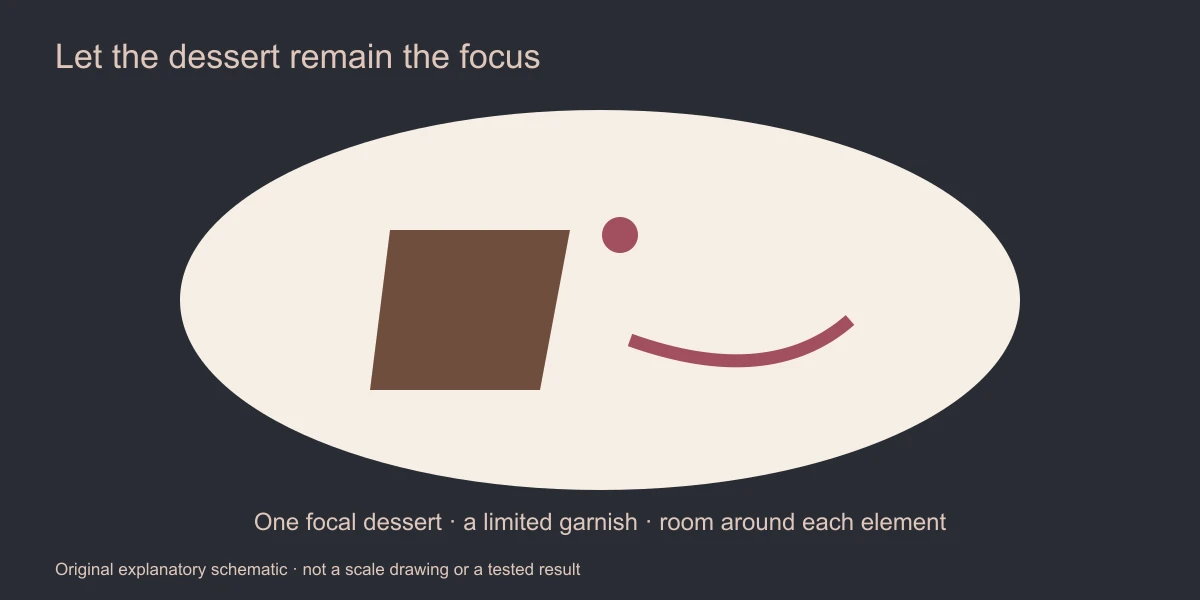
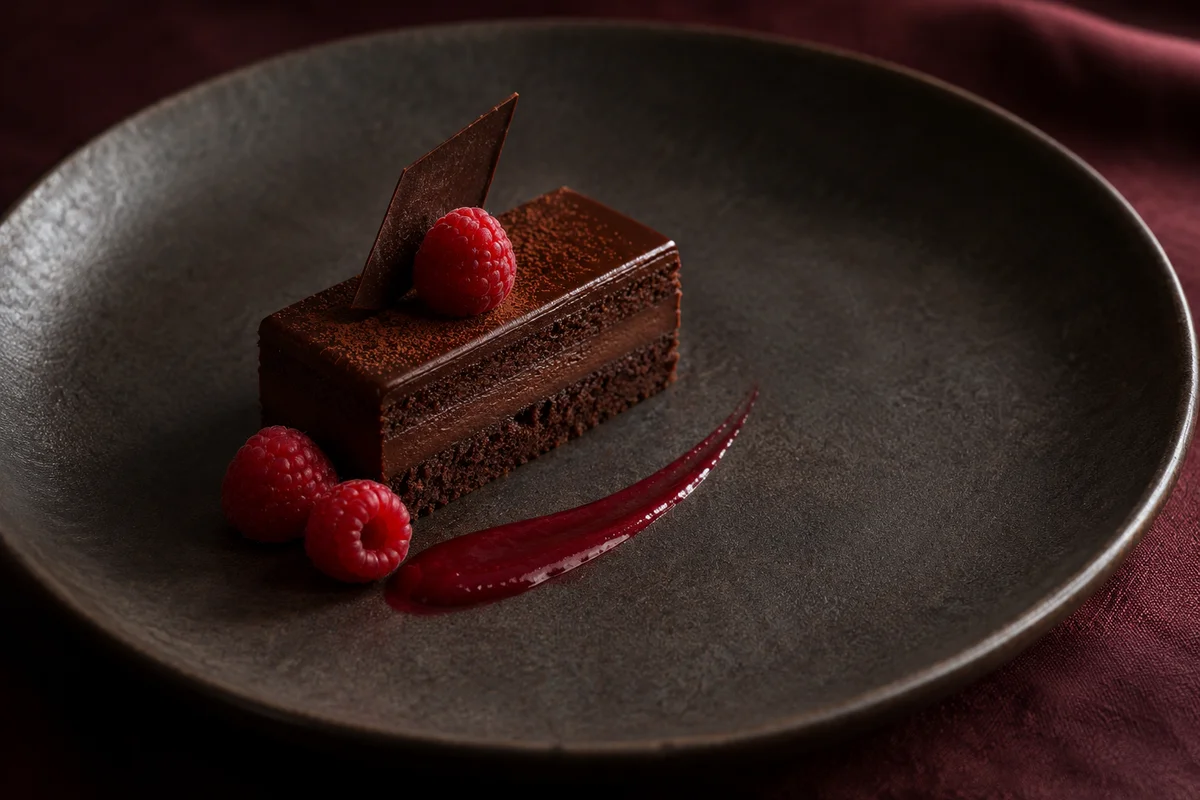
For example, a small rectangular chocolate cake can sit just left of center with a short raspberry sauce stroke close to its long side. A few berries can connect the cake with the sauce. Scattering more berries around the entire rim would divide attention and make the plate harder to carry neatly.
Plan sauce as an edible component
Choose a sauce that belongs with the dessert. Its flavor and consistency matter more than the shape you can draw with it. A very thin sauce may spread into a puddle; a very thick one may leave a heavy mound that is difficult to distribute with each bite.
Test a small spoonful on an empty plate before plating the dessert. Observe whether it holds a short stroke or immediately runs. If you want a swipe, place a small amount down and pull a spoon through it once. Repeatedly working the same stroke tends to produce ragged edges and a larger area than you intended.
Keep sauce away from a crisp base until serving unless the recipe intends it to soak in. A delicate pastry shell can lose its contrast when it sits in a broad pool. You can place sauce beside the tart so each guest combines it with a bite, rather than allowing the entire base to absorb it.
Give every garnish a job
A garnish can introduce color, a contrasting texture or a small hint of the dessert's flavor. A chocolate shard can echo a chocolate cake, while a few berries can repeat a fruit filling. A garnish that is attractive but unrelated may leave the plate feeling assembled from separate ideas.
Choose pieces that can be eaten comfortably with the dessert. A large hard decoration that requires a different utensil can interrupt the serving. Avoid adding an oversized garnish simply to create height; a modest change in angle often provides enough variation.
- Repeat a flavor already present, or introduce one clear complementary flavor.
- Keep decorative pieces proportionate to the serving.
- Place loose crumbs intentionally in a small area, not across the whole rim.
- Keep inedible decorations separate from the food and remove them before eating.
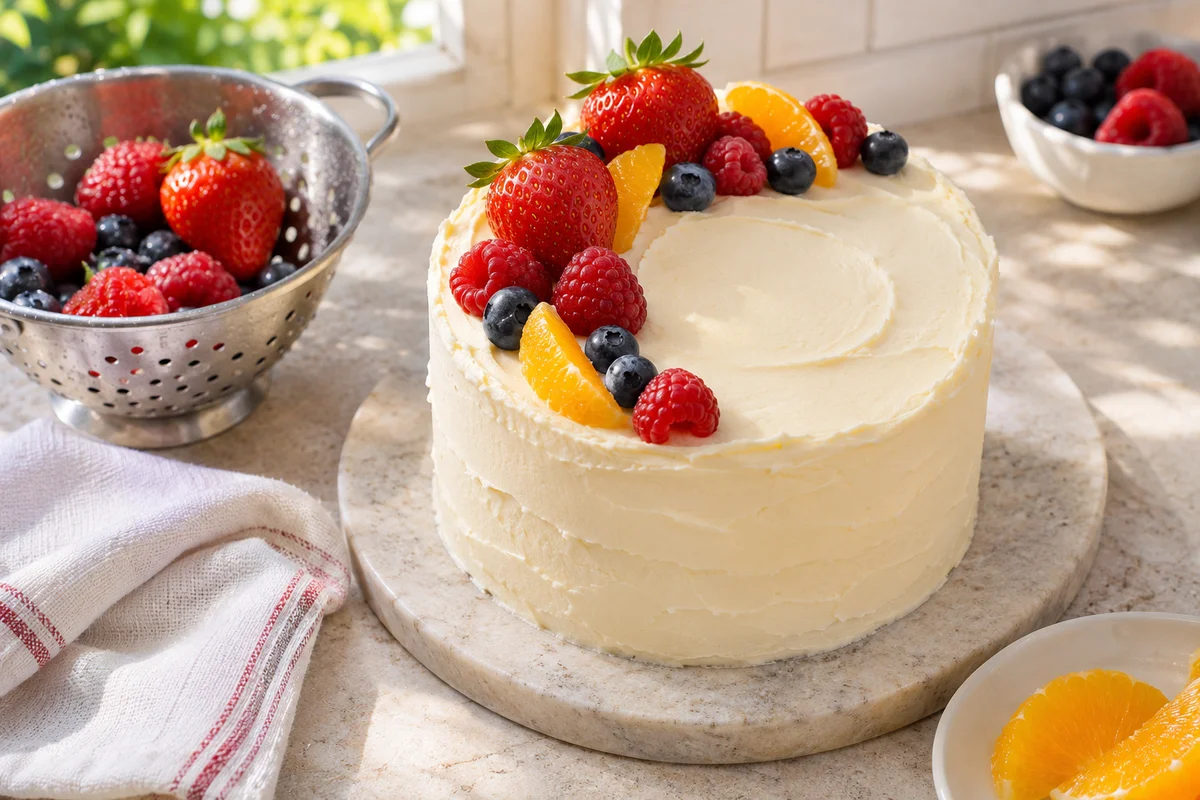
Fruit needs particular care because its cut surfaces can release juice. The guide to fresh fruit decoration discusses preparation and moisture management. Use that preparation before judging a fruit arrangement purely by its color.
Use empty space with a clear boundary
Empty plate area helps distinguish the main dessert from its accompaniments. It does not need to be measured as an exact percentage. Leave enough uninterrupted space for the eye to rest and for the guest to maneuver a spoon or fork without pushing through decorations.
Think of a compact visual neighborhood. The cake, sauce and garnish can sit close enough to read as one serving while still remaining distinct. When every component is placed far from the others, the guest may not know which elements are intended to be eaten together.
If the plate feels too bare, reduce the plate size before multiplying garnishes. A smaller suitable dish can make the same dessert feel deliberate without changing the portion. If the plate feels crowded, remove the least useful component rather than compressing everything into tighter gaps.
Build the plate in an order that protects the finish
- Check that the plate is clean, dry and appropriate for the dessert.
- Make any sauce mark that must go beneath or beside the main component.
- Transfer the dessert using a tool that supports its base.
- Add fruit or a secondary component without disturbing the sauce.
- Place delicate garnishes last.
- Inspect the rim and the serving position before carrying the plate.
Support a cake slice from below instead of gripping its frosting sides. Set it down once if possible, because dragging it across the plate can leave a trail of crumbs or cream. When cutting several portions, clean the cutting tool as appropriate between slices so the edges do not accumulate residue from the previous cut.
If you are preparing several plates, complete one trial arrangement first. Check whether the steps can be repeated without a long pause. A design that requires several delicate last-second actions may be less suitable for a home dinner than a simpler arrangement you can finish calmly.
Adapt the method to different desserts
For a soft dessert served in a glass, the vessel itself establishes the structure. Keep any accompanying biscuit on a separate dry area of the plate rather than balancing it where it may fall into the dessert. The plate can provide room for the spoon without becoming a second full composition.
For a crisp tart, show the pastry edge and keep wet accompaniments controlled. A few carefully placed fruit pieces can echo the filling without covering all the work in the crust. For a plain brownie, a defined cut edge and restrained garnish often do more than an elaborate sauce pattern.
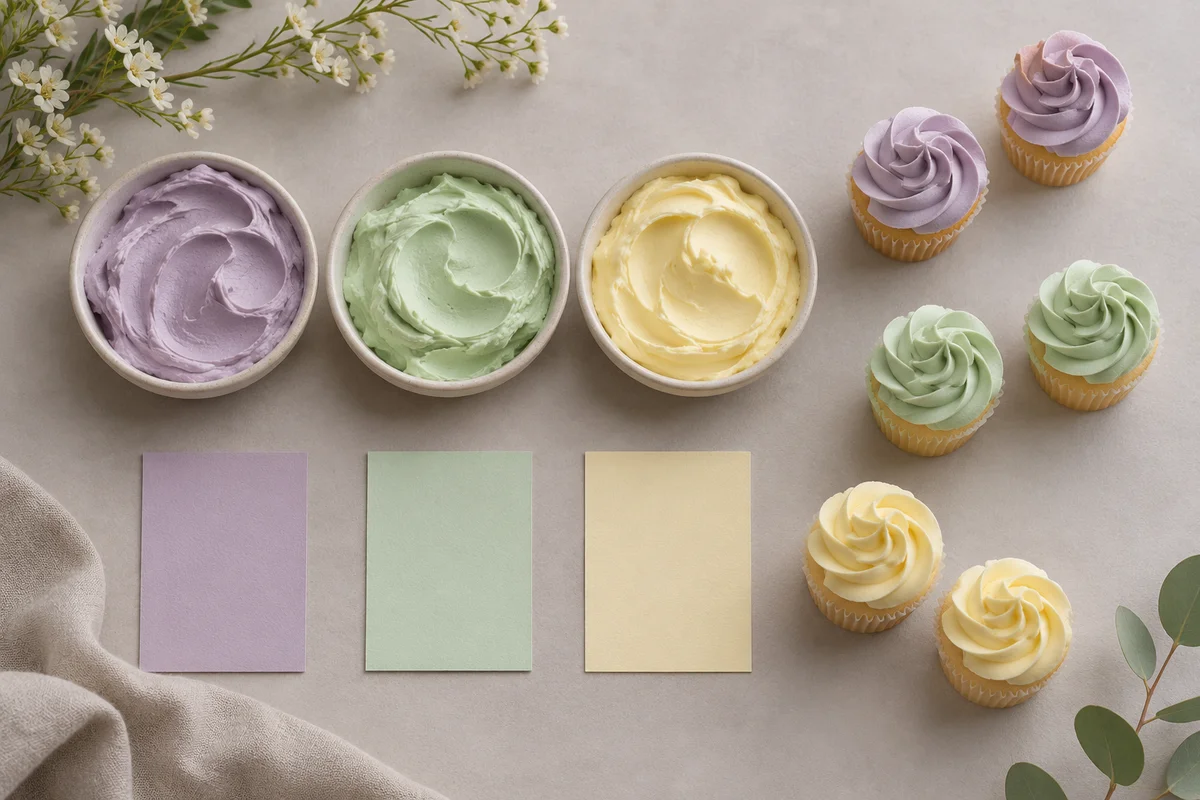
Use color to connect the components, but do not confuse coordination with identical color. A pale cream accompaniment can create contrast beside dark chocolate. The dessert color guide explains how main, supporting and accent colors can work at the scale of a single plate as well as a table.
Correct a messy plate by simplifying
If a sauce runs farther than expected, do not automatically surround it with more decorations. Move the dessert to a clean plate if it can be transferred safely, or accept a simpler presentation that suits the sauce's real texture. Adding unrelated components usually makes the problem more obvious.
When crumbs or fingerprints reach the rim, clean the affected area with an appropriate clean material rather than spreading the mark around. Inspect the plate from the guest's side, not only from directly above. A composition that looks neat from overhead may hide the dessert behind an oversized garnish at seated eye level.
For shared occasions, use these same ideas in a grouped dessert board or a small celebration table. Keep the focal food clear, make each accompaniment useful and leave the person eating it enough room to enjoy it.
← Back to Dessert Styling