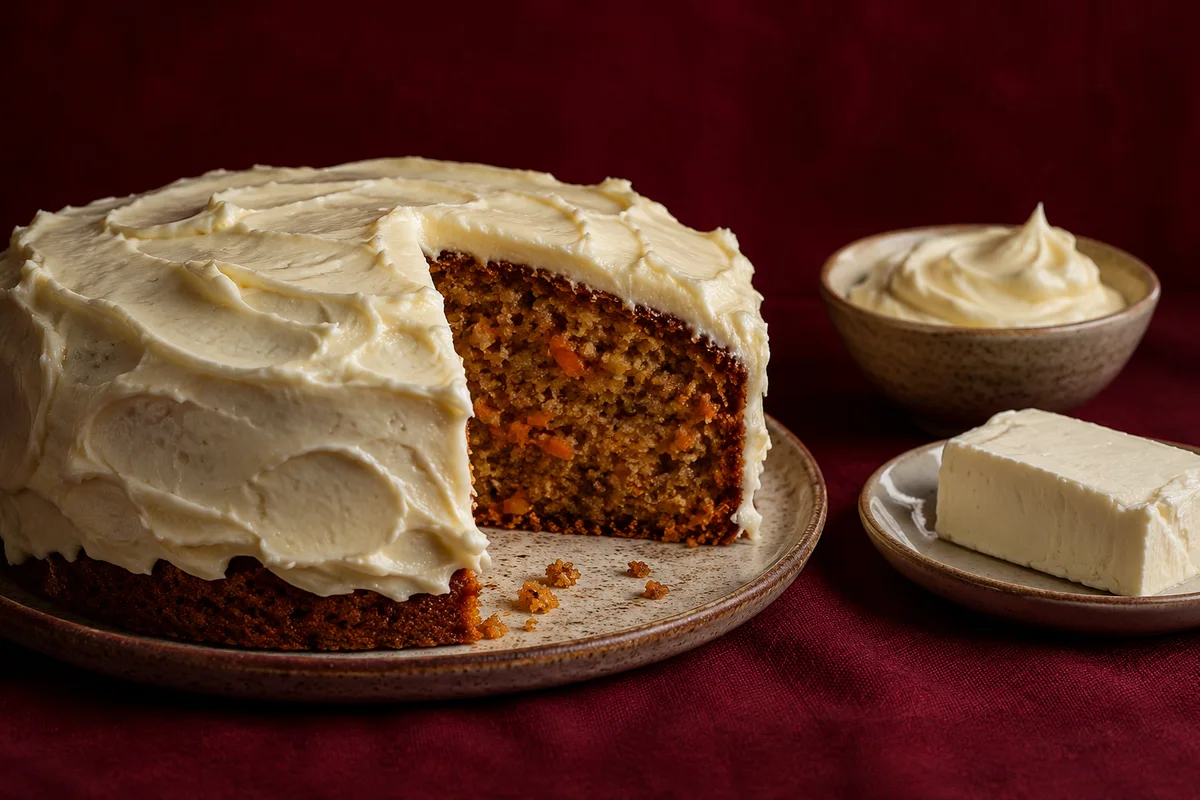
Stable cream cheese frosting needs a realistic definition. A frosting that spreads neatly over carrot cake may still be too soft for a tall piped flower or a sharp-edged layer cake. Decide which decoration you want before changing the recipe; more powdered sugar is not the answer to every unstable batch.
The goal is to preserve the tangy flavor while producing enough structure for the chosen finish. Ingredient selection, temperature, mixing and the amount of added liquid all influence that result. Physical firmness and food safety are separate matters: a frosting that holds its shape can still require refrigeration.
Choose the cream cheese your recipe expects
Recipes written for full-fat block cream cheese may behave differently with a whipped, reduced-fat or spreadable product. Check the actual label and the recipe's product specification. Packaging conventions vary between countries, so a tub is not automatically wrong everywhere, nor is every rectangular package compositionally identical.
Look for a formula developed for a cream cheese you can buy locally. If the instructions name a block product, do not substitute a spread and compensate with an unknown quantity of sugar without expecting changes. Water, fat and stabilizer differences can affect how the mixture behaves even when the products share the same basic name.
Butter adds a second source of structure and richness. A butter-heavy cream cheese frosting can behave differently from a cheese-forward one, but increasing butter also changes flavor and yield. Treat the ratio as part of a deliberate recipe choice rather than an unlimited repair ingredient.
Start with a complete formula
For a professional spreadable reference, King Arthur Baking's cream cheese frosting combines 85g butter with 227g cream cheese and a stated range of confectioners' sugar. Its instructions add milk to reach a spreading texture. That example illustrates why the desired use matters: a frosting deliberately loosened for spreading should not be assumed to pipe intricate flowers.
That reference specifies 397–454g confectioners' sugar and one teaspoon vanilla for its 85g butter and 227g cream cheese. Its 28–57g milk range deliberately produces a spreadable finish; do not add that much liquid automatically to a bowl intended for piping. Consult the complete recipe rather than combining these quantities with instructions for a different frosting.
Use a formula whose intended application resembles your project. A generous soft swirl on a single-layer cake asks less of the frosting than stacked fillings and a detailed shell border. If a recipe only promises a spreadable finish, changing its optional liquid may help handling, but it does not establish a tested structural result for every decoration.
- Read the recipe's cream cheese specification before shopping.
- Weigh the butter, cheese and sugar consistently.
- Measure flavorings and any liquid rather than pouring freely.
- Set aside clean tools and a small test area before decorating.
- Plan refrigerator space for the finished cake and remaining frosting.
Get the ingredients workable without making them slack
Butter needs to mix without firm lumps, while cream cheese should reach the condition the recipe specifies. Softened does not mean melted, oily or left out until very warm. Judge the texture directly and follow the formula's method rather than relying on a universal counter-softening time.
If the butter is hard and the cheese very soft, the bowl may contain small butter pieces suspended in an increasingly loose mixture. More beating can warm the cheese without solving the initial mismatch efficiently. Prepare the ingredients before combining them so the mixer is blending compatible textures.
When the room is warm, organize the tools and cake first. Do not finish the frosting, then leave it waiting while you clear the counter and find a piping tip. Short, organized working stages reduce unnecessary warming and make it easier to assess whether the recipe is suitable.
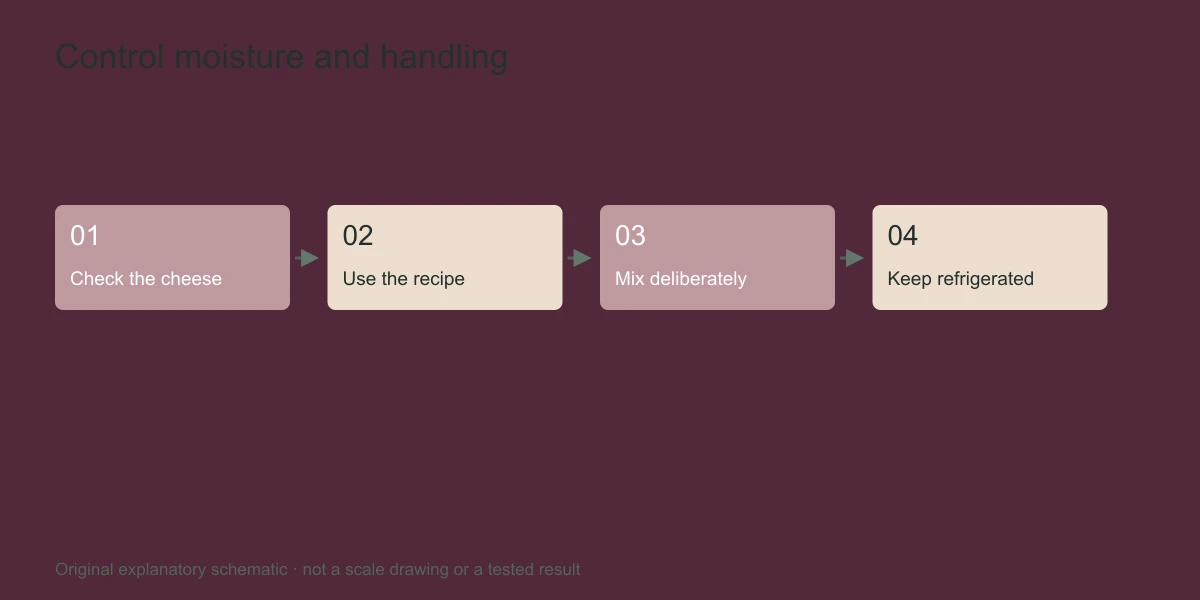
Mix in the recipe's order
- Prepare the butter and cream cheese to the recipe's specified condition. Remove any packaging completely and check for obvious product differences before starting.
- Combine ingredients in the stated order, using a speed that blends them without spraying the bowl. Scrape the bottom and sides as needed.
- Add sugar in manageable portions. Stop the machine before each addition, then resume slowly so dry pockets become incorporated.
- Add optional liquid only after inspecting the texture. If the frosting is already appropriately soft for the intended use, do not add a whole listed range automatically.
- Make a small test decoration and observe it before filling a large bag or coating the entire cake.
Different recipes use different mixing orders, including methods that prepare a butter-sugar base before introducing the cheese. Follow the selected recipe consistently rather than combining convenient fragments from several methods. If you change the order, consider it an unverified variation and assess a small batch before relying on it for an event.
Test the actual decoration
A bowl peak is a rough observation, but a test made with your actual tip is more useful. Pipe three small stars or a short border onto clean parchment. Compare their size, ridge definition and settling while you prepare another part of the project.
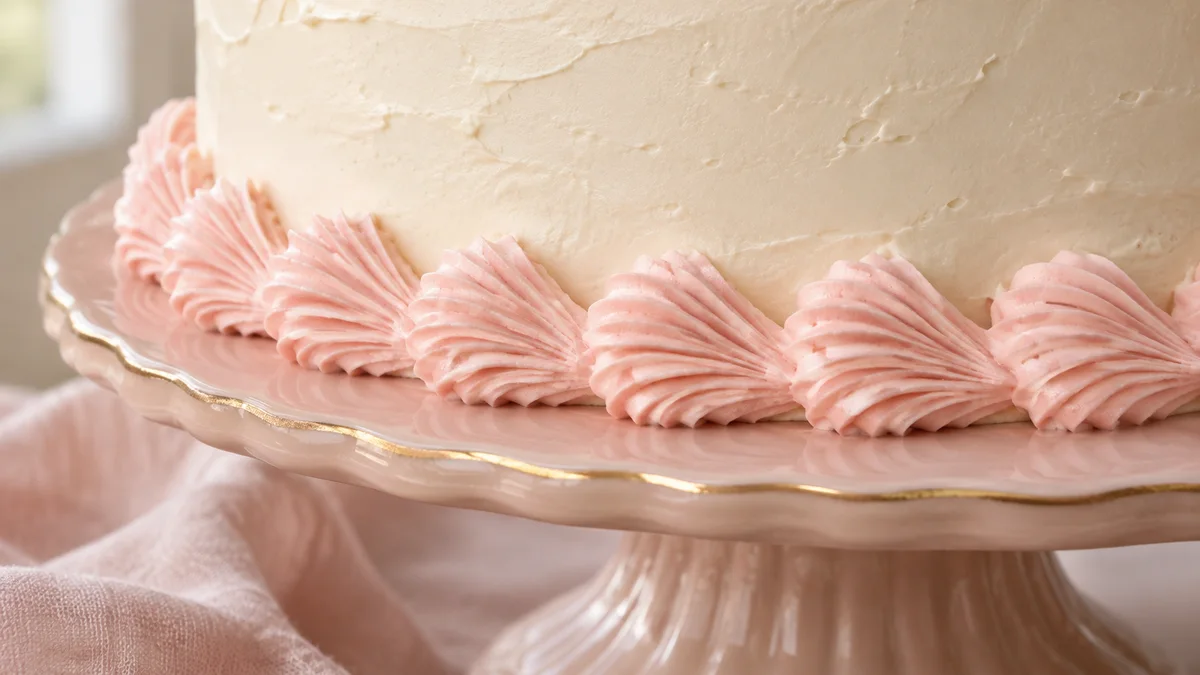
If shallow shapes remain clear but tall details lean, adapt the design before trying to force the mixture into a different frosting category. A soft textured coating and a simple top border can look intentional. A full display of fragile flowers that repeatedly slumps may need a different frosting or a different decoration plan.
Our shell-border guide explains the pressure-and-release movement. Practice that motion with a controllable frosting first, so you can distinguish an unfamiliar technique from a mixture that is unsuitable for the shape.
Correct the cause before adding ingredients
| Observation | Question to ask | Useful response |
|---|---|---|
| Frosting softens during use | Has the working portion warmed? | Reassess its temperature and use smaller portions. |
| Mixture is loose from the start | Was a different cheese or excess liquid used? | Compare labels and proportions before changing the batch. |
| Small firm lumps remain | Were ingredients unevenly prepared? | Address texture rather than adding more milk blindly. |
| More sugar changes little | Is warmth or product composition the main issue? | Stop repeated additions and test a small sample. |
A brief refrigerated pause may firm a warm mixture, but it does not guarantee that the frosting will hold once it returns to the display environment. Test again at a realistic working condition. Chilling is useful for handling, not a way to prove that an unstable formula has become structurally reliable.
If a recipe adjustment is appropriate, make it in a measured sample and compare it with the original. Record what changed in sweetness, color and piping resistance. Do not keep adding sugar until the frosting is no longer pleasant simply to preserve an ambitious design.
Refrigeration is a safety requirement, not a texture trick
For an unvalidated homemade cream cheese frosting, use refrigeration rather than assuming that sugar makes it shelf-stable. The Minnesota Department of Agriculture distinguishes appearance-related chilling from safety-related refrigeration and calls for assessment of a specific recipe and process before homemade frosting is treated as shelf-stable.
FoodSafety.gov recommends refrigerator temperatures of 40°F/4°C or below and limits unrefrigerated exposure of perishable food to two hours, or one hour above 90°F/32°C. Plan decorating, transport and serving together. A cool-feeling room, intact border or tangy taste does not replace that handling plan.
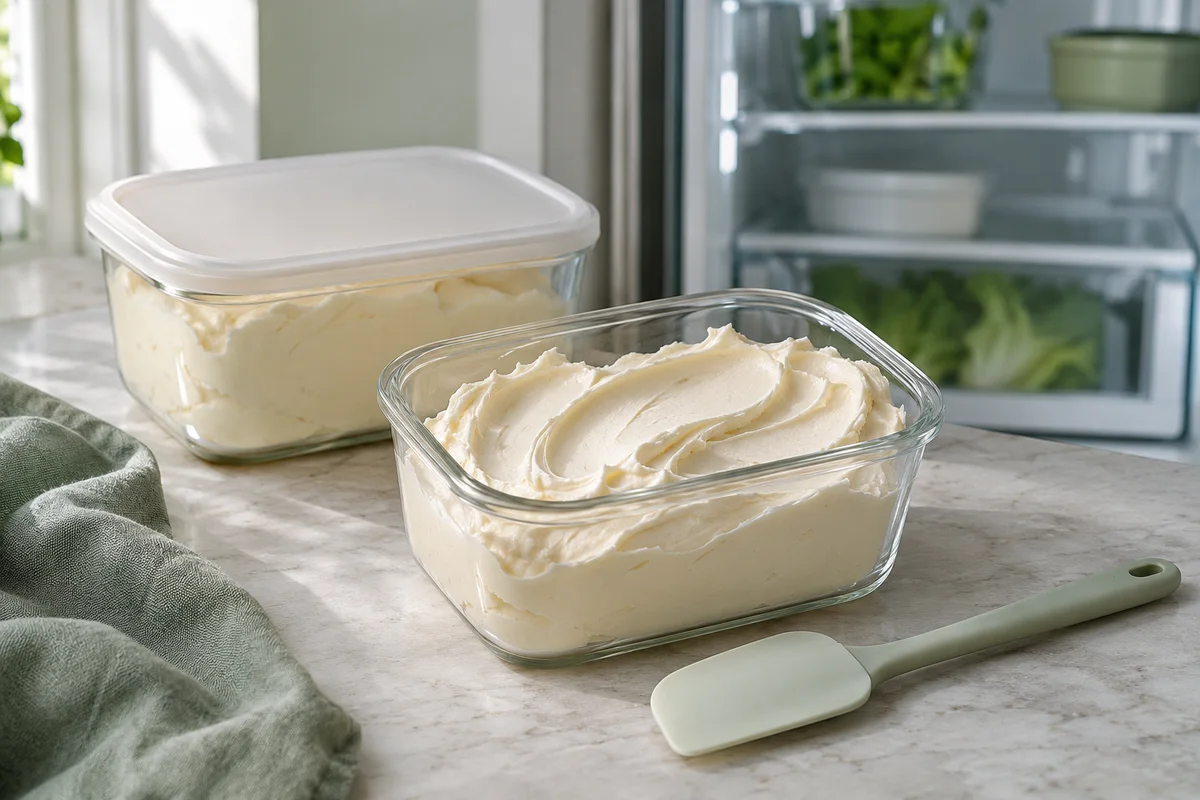
Use the storage directions for the selected frosting and the cake's most perishable component. Do not borrow the shelf life of an unopened package of cream cheese for a mixed, handled frosting. Our storage guide explains how to separate formula guidance, handling history and quality changes.
Choose a finish the frosting can support
Think about the cake's assembly too. Heavy layers and slippery fillings add pressure that a surface piping test does not measure. Keep the filling appropriate to the structure and consult the layer-stacking guide rather than expecting extra-stiff frosting to correct a poorly supported cake. Decoration and assembly should solve their own problems.
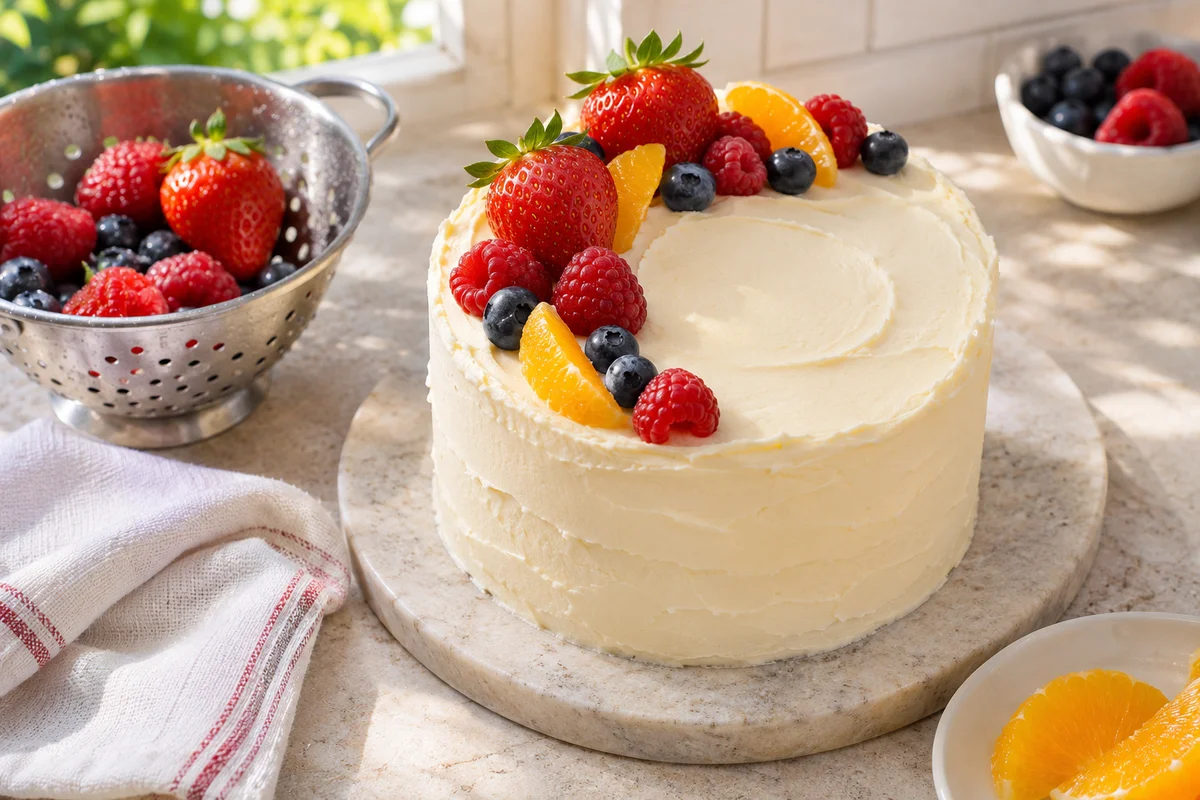
For a home celebration, a clean textured coat, modest rosettes or a neatly spread top can show cream cheese frosting at its best. Keep any wet garnishes for an appropriate final stage and follow the fresh-fruit decorating guide when adding berries or sliced fruit.
Before committing to a large batch, make the intended decoration at the intended scale. A tiny star is not a complete test of a tall swirl. Choose the simpler finish when the test cannot reliably hold, and plan an alternative before the cake is assembled. Reliable decorating begins with a suitable design as much as a suitable recipe.