Choose between Swiss meringue and American buttercream by looking at the job your frosting must do. A birthday cake with textured swirls, a sharply scraped layer cake and a tray of pastel cupcakes do not place identical demands on sweetness, texture or preparation time. Neither frosting is the automatic winner for every kitchen.
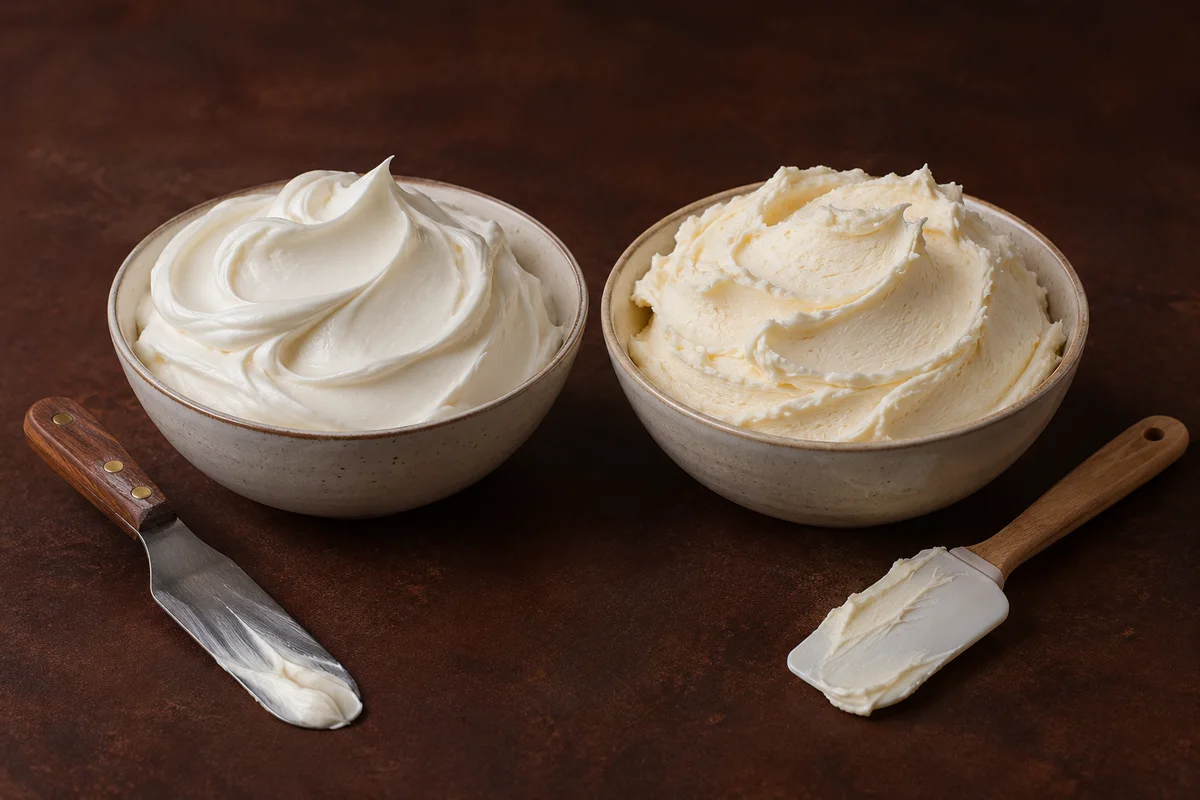
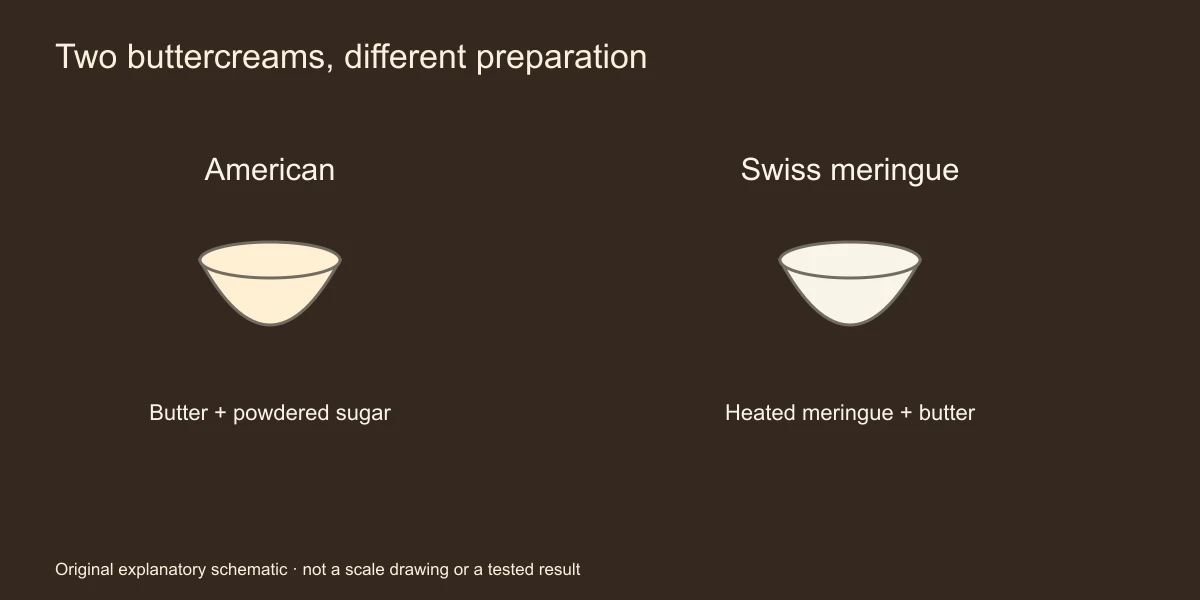
Swiss meringue buttercream begins with a heated egg-white and sugar mixture that is whipped and combined with butter. American buttercream usually begins with butter and confectioners' sugar. That difference changes the workflow as well as the finish, so compare the whole process rather than judging only a photograph of the completed cake.
Two methods, two kinds of structure
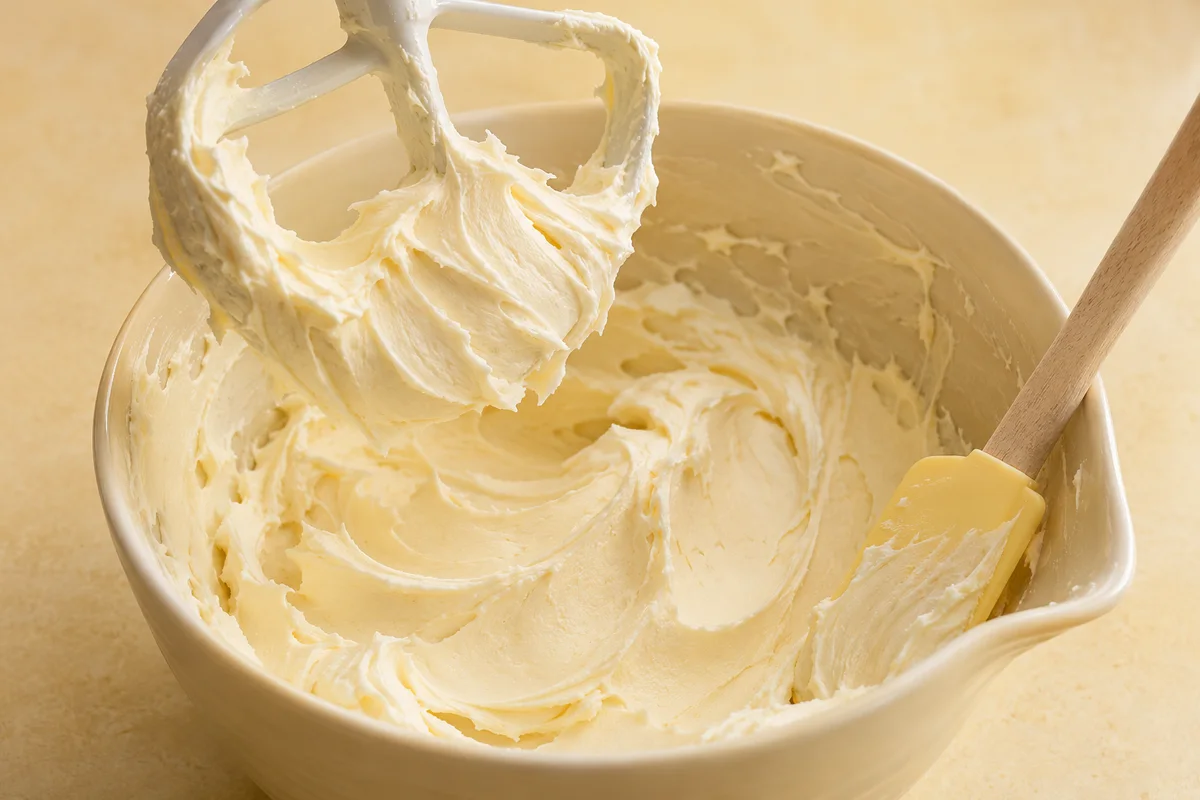
In American buttercream, fine powdered sugar is dispersed through the fat with flavoring and a small amount of liquid. There is no meringue stage. You can usually make it with a relatively simple mixer setup, then adjust a portion for spreading or piping without managing an egg-white foam.
Swiss buttercream uses a meringue as part of its structure. The egg-white and sugar mixture must be heated according to the selected recipe, whipped and cooled appropriately before butter is added. The frosting can appear loose or curdled during mixing, making temperature and patience particularly important to interpreting what is happening in the bowl.
For a concrete professional example, King Arthur Baking's Swiss recipe heats its sugar and egg-white mixture to 161°F while whisking, then cools the whipped meringue before incorporating butter. That instruction belongs to the linked formula. Do not combine the ingredient ratio from one recipe with an unrelated heating schedule and assume the process remains equivalent.
A practical comparison
| Consideration | American buttercream | Swiss meringue buttercream |
|---|---|---|
| Starting structure | Butter and confectioners' sugar | Heated egg-white meringue plus butter |
| Typical impression | Sweet, substantial, familiar | Silky, buttery, often perceived as less sweet |
| Preparation demands | Control butter texture and mixing | Manage heating, whipping and cooling stages |
| Decorating adjustments | Small liquid or sugar changes within the recipe | Often diagnose temperature before changing ingredients |
| Useful starting projects | Textured cakes, basic borders, cupcakes | Smooth coatings, delicate finishes, piped details |
These are tendencies rather than guarantees. Buttercream recipes vary in their ratios and additions. A very lightly mixed American frosting can contain fewer visible bubbles than an aggressively aerated Swiss batch. A well-made example of one style is more useful than comparing it with an unsuccessful version of the other.
Compare sweetness and texture honestly
American buttercream is typically the more noticeably sweet option because confectioners' sugar provides so much of its body. That can be an advantage on a bitter chocolate cake or a small cupcake where a familiar frosting flavor is part of the appeal. It may be less appealing to someone who prefers a restrained sweet finish.
Swiss buttercream often feels smoother and more butter-forward. That does not make it light in ingredients or automatically preferable to every guest. At a cold serving temperature, butter-rich frosting can feel firmer and taste differently from the same frosting at its intended serving condition. Consider the actual event rather than tasting a refrigerated spoonful and dismissing the style.
Match flavor decisions to the cake. A delicate sponge may benefit from a quieter frosting, while a robust spice cake can support a stronger vanilla or cocoa note. Compare modest amounts, and remember that tasting frosting alone exaggerates differences that may feel less dramatic once cake and filling are included.
Which is easier to make smooth?
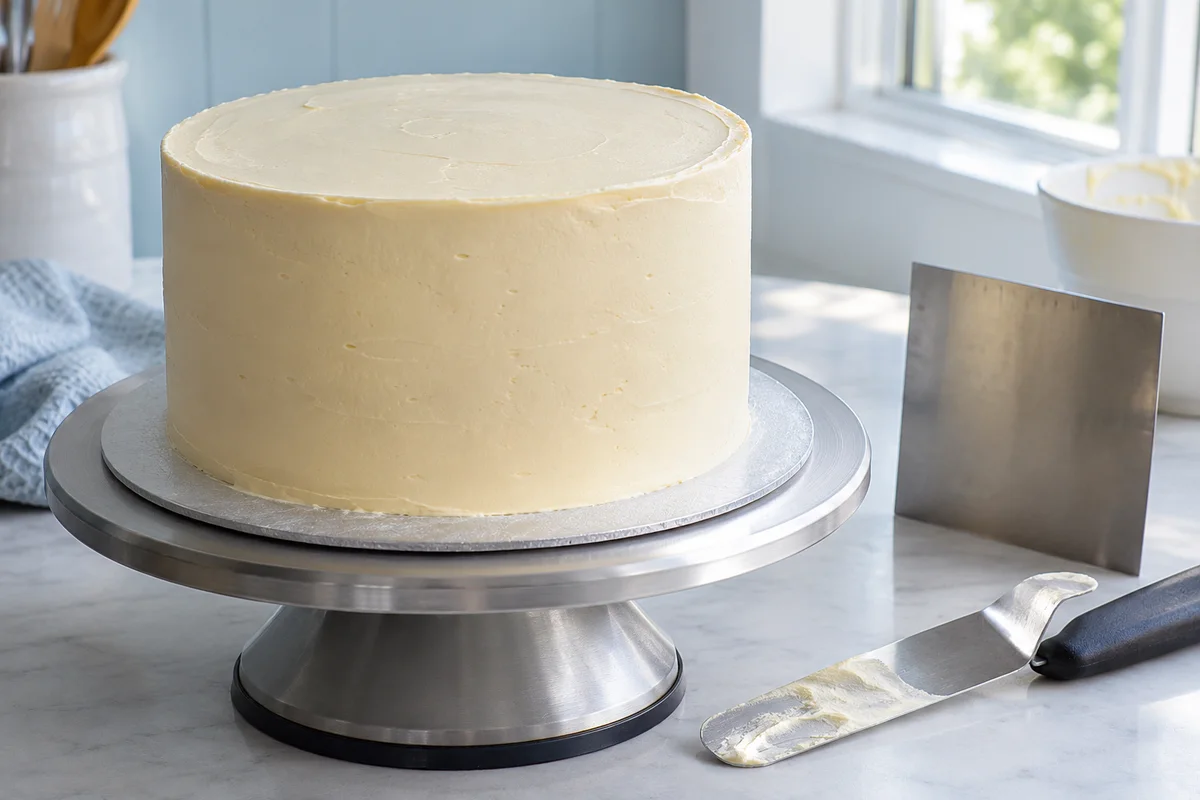
Both can produce a clean coating. Swiss buttercream's silky texture often suits scraping and fine finishing, but it still develops air pockets if the mixing introduces them. American buttercream may require careful sugar handling and a gentle finishing stage. Neither eliminates the need for level layers, a sound crumb coat and a steady scraper.
If a coating looks rough, separate the issues. A shallow pit might come from air in the frosting; a dark fleck may be a crumb; a repeated ridge may follow the scraper's angle. Changing buttercream type will not necessarily fix a cake that shifts or a tool that is tilted throughout every pass.
Read the smooth-edge technique for the mechanical part of the finish. When the mixture itself is pitted, use the air-bubble troubleshooting sequence before making more scraper passes across the cake.
Choose for the decoration you actually want
- Large textured swirls: American buttercream is a practical first choice when the recipe offers a controllable piping consistency.
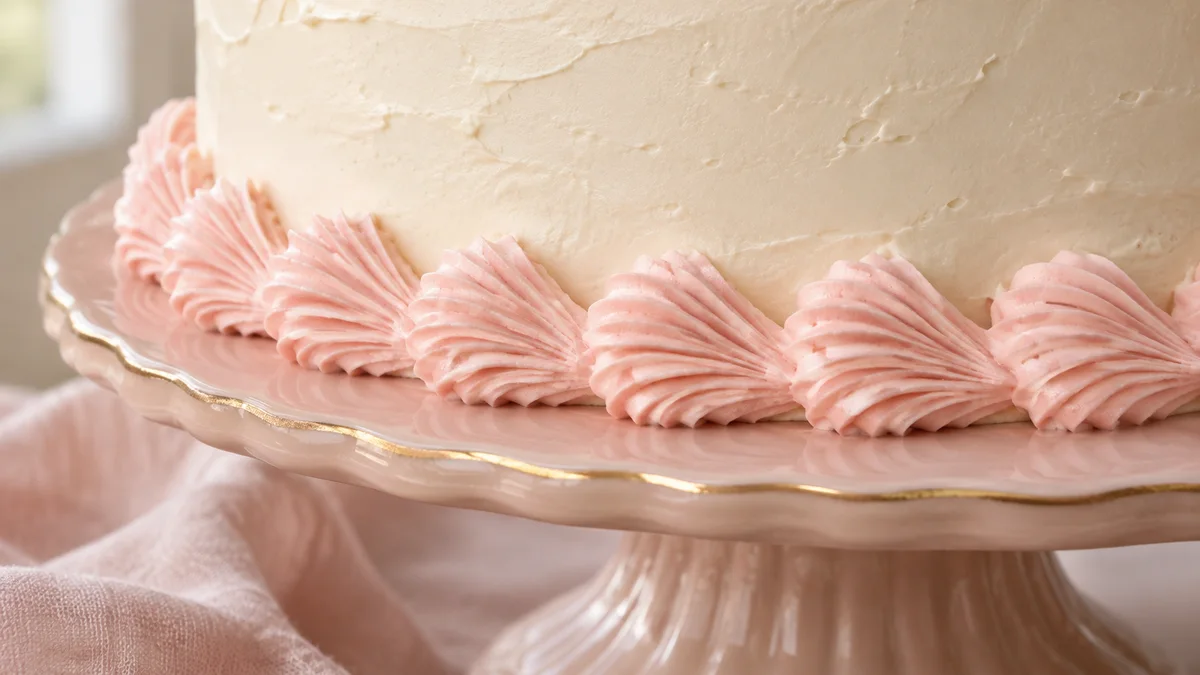
- Low rosettes and borders: Both styles can work; judge the test shape's ridge definition and settling rather than assuming one name guarantees success.
- A smooth cake with a restrained finish: Swiss may suit your preferred mouthfeel and handling, provided you are comfortable with its preparation stages.
- An unfamiliar recipe close to an event: Choose the formula you can prepare reliably instead of adding a new technical process under time pressure.
A small test bag gives better information than a bowl photograph. Pipe a short border, let it settle while you prepare another task, and inspect whether the details remain clear. Our shell-border guide offers a repeatable movement for comparing the working texture of different batches.
Neither is heatproof
Butter-based frostings respond to warmth. A frosting that behaves beautifully in a cool kitchen may soften in a hot car or beside a sunny window. Swiss buttercream's meringue does not turn butter into a heatproof coating, and extra powdered sugar does not make an American batch immune to poor display conditions.
Plan transport and display before choosing the decoration. Delicate tall details create a different practical risk from a shallow textured coating. If the venue cannot provide suitable cold storage for a perishable cake, changing the frosting's name is not an adequate solution. Simplify the dessert plan or arrange appropriate temperature control.
Safety and appearance are separate questions. A frosting may still look intact after unsafe handling, or soften during a brief safe working period. Use the recipe and the most perishable filling to plan storage, following the storage and reuse guide rather than treating a neat piped shape as a safety test.
A useful choice for a first attempt
Batch size also changes the experience. A very small amount of egg-white mixture may be awkward for a large mixer whisk to reach, while a full bowl of thick American buttercream can strain a small hand mixer. Use a recipe quantity compatible with your equipment. Avoid assuming that halving ingredients always leaves the heating, whisk contact and cooling stages unchanged. If the recipe offers a smaller tested yield, that is a better starting point than improvising a miniature version when you are also learning the method. Check bowl access, beater clearance and the amount of frosting your actual decoration needs before beginning.
If you are learning to hold a bag, manage a spatula and assemble layers at the same time, American buttercream removes the extra meringue process from that learning session. Start with a proven formula, record its texture and practice a limited number of shapes. The simpler workflow leaves more attention for the decorating movement.
If you enjoy thermometer-based methods and want a silkier butter-forward finish, Swiss buttercream is a reasonable next project. Prepare it when you can watch the process without interruption. Have the butter ready and allow the meringue stage to reach the condition the recipe describes instead of rushing because the cake is waiting.
For a small birthday cake, the useful question might be whether you want a sweet textured finish or a restrained silky coating. For thirty cupcakes, preparation capacity and repeated piping may matter more. Write that priority down before choosing the formula. It gives you a practical reason for your choice and a clear criterion for deciding what to change next time.