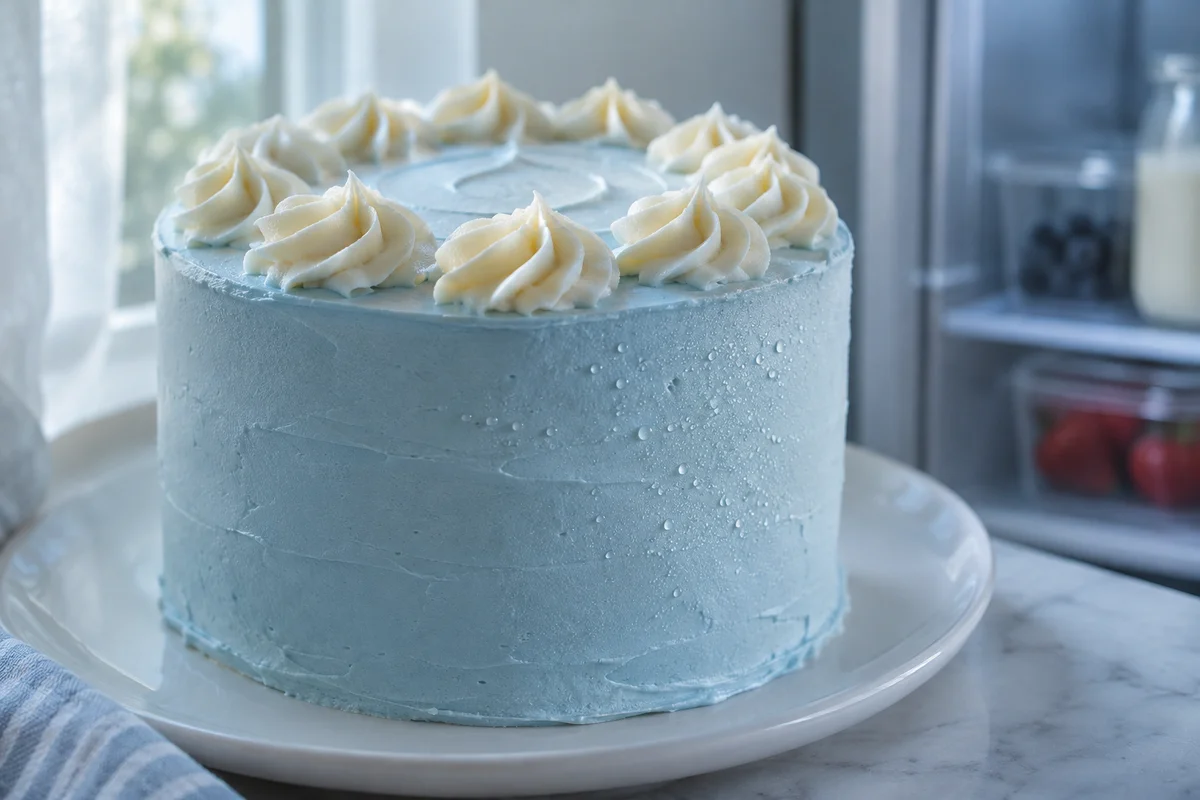
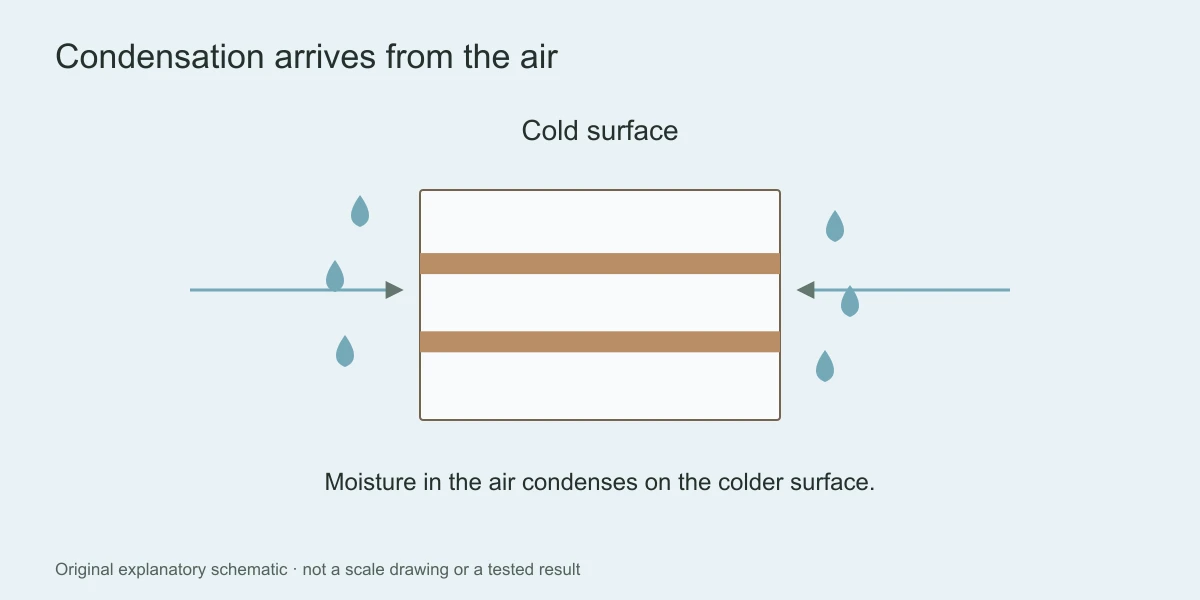
Frosting condensation often appears when a cold cake meets air that is warmer and contains enough moisture for droplets to form on its surface. The cake has not necessarily released water from inside, and the frosting is not automatically melting. Identifying where the moisture comes from helps you avoid repairs that make a delicate finish worse.
Begin with the timing. Did droplets appear immediately after the cake left refrigeration, after fruit was added, or only around a filling seam? Look at bare sections as well as decorated areas. A pattern across the whole cold surface suggests a different cause from one wet patch beneath sliced berries.
Understand the cold-surface effect
Air contains water vapor. When a surface is sufficiently cold relative to the surrounding air's dew point, some vapor condenses into liquid droplets. The Met Office explanation of dew describes this relationship between surface temperature and atmospheric moisture.
A cold bottle taken from a refrigerator provides a familiar comparison. Water can collect outside the bottle even though its contents have not leaked. A cake is more delicate than glass, but the cold-surface mechanism helps explain why newly formed droplets do not necessarily mean the recipe contained too much liquid.
Temperature alone is not the whole story. Two rooms at similar temperatures can contain different amounts of moisture. A kitchen with active steaming pots or repeated dishwashing can expose a cold cake to different conditions from a quieter, drier preparation space.
Distinguish condensation from other moisture
Fine droplets distributed across unrelated sections of cold frosting are consistent with condensation. A colored stream emerging from a fruit cluster may instead be fruit juice. Liquid appearing at a filling seam can point toward filling leakage or instability inside the cake.
Look at the texture beneath the water as well. A firm decorated surface with small beads is not identical to a glossy soft coating that is slumping. Both problems can occur during a warm transition, but one is primarily surface moisture while the other also involves the frosting's physical structure.
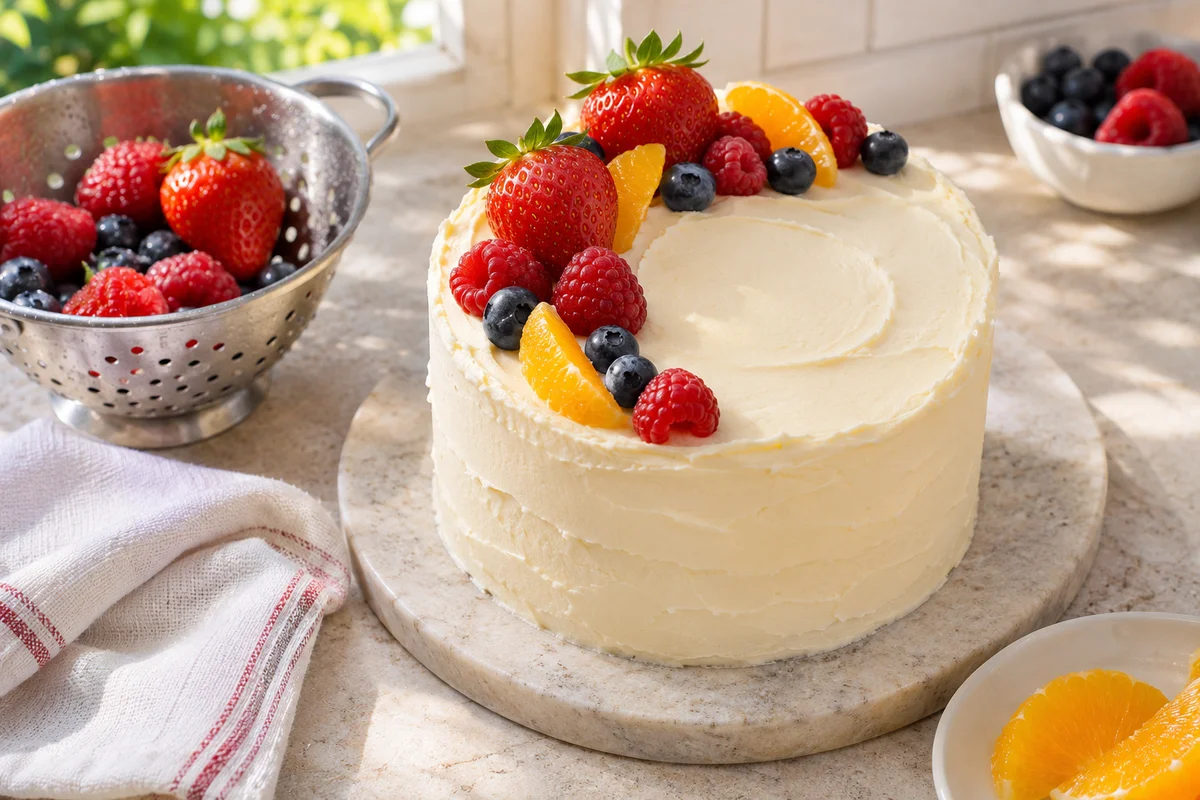
For fruit-related moisture, read the fresh-fruit decorating guide. If the coating itself moves, consult the sliding-buttercream guide. A correct diagnosis protects you from treating every wet area as the same problem.
Plan cold storage around the actual cake
Refrigeration may be necessary because of the frosting or filling. Do not remove a cake from appropriate cold storage for an extended period merely to avoid possible droplets. The storage needs of the most perishable component take priority over a cosmetic preference.
FoodSafety.gov recommends refrigeration at 40°F/4°C or below and limits unrefrigerated exposure of perishable foods to two hours, shortened to one hour above 90°F/32°C. Include decorating, transport and display when planning that exposure. Returning the cake to refrigeration does not reverse earlier unsafe holding.
Store the cake in an appropriate clean container that does not touch its decoration. Protect it from drips, strong odors and raw-food contamination. A box or cover is part of good handling; it is not a guarantee that condensation can never appear during a change of conditions.
Make transitions more deliberate
Prepare the display position before moving the cake. Avoid taking it from the refrigerator while you search for a stand, clear the table or finish a hot cooking task. Those delays increase handling and expose the surface before there is any useful reason for the cake to be out.
Choose a stable location away from direct sunshine, steam sources and unnecessary warmth. If the cake must travel, keep its container level and use the recipe-appropriate cold transport arrangement. Do not leave it in a vehicle while completing errands or assume that air conditioning in the passenger area controls every part of the cake.
Keep an appropriate cover in place during transport and open it when the cake needs to be accessed. Packaging can change how much surrounding air reaches the surface, but its effect depends on the materials and conditions. It is not a validated universal warming schedule or a substitute for refrigeration.
When droplets appear, inspect before touching
- Note the cake's recent temperature change and inspect the distribution of the moisture.
- Check whether the frosting remains structurally sound or is also softening and moving.
- Keep the cake within its required safe handling conditions while deciding whether a cosmetic repair is necessary.
- Avoid rubbing decorated areas or dragging water across contrasting colors.
- Correct only a localized issue once the surface is suitable to work, rather than recoating every damp area immediately.
Small droplets may be less damaging when left undisturbed than when wiped through piped ridges. A towel can pick up color and smear details, especially on a freshly softened finish. Do not turn a temporary bead of moisture into a broad patch by rubbing repeatedly.
If water collects on the board, deal with the accessible board carefully using clean materials without sweeping them across the cake. Keep the serving area tidy and avoid allowing pooled liquid from other decorations or containers to run against the coating.
Avoid powders and heat as automatic fixes
Dusting wet frosting with powdered sugar or starch can create a patchy paste rather than restoring the original smooth surface. It also changes color and texture. Do not coat the entire cake with an extra ingredient simply because it absorbs a visible droplet in a tiny test.
Strong warm airflow can soften buttercream while moving surface moisture, leaving a less stable coating. Household equipment may introduce other cleanliness concerns as well. Use a recipe-appropriate working environment instead of directing uncontrolled heat at a finished dessert.
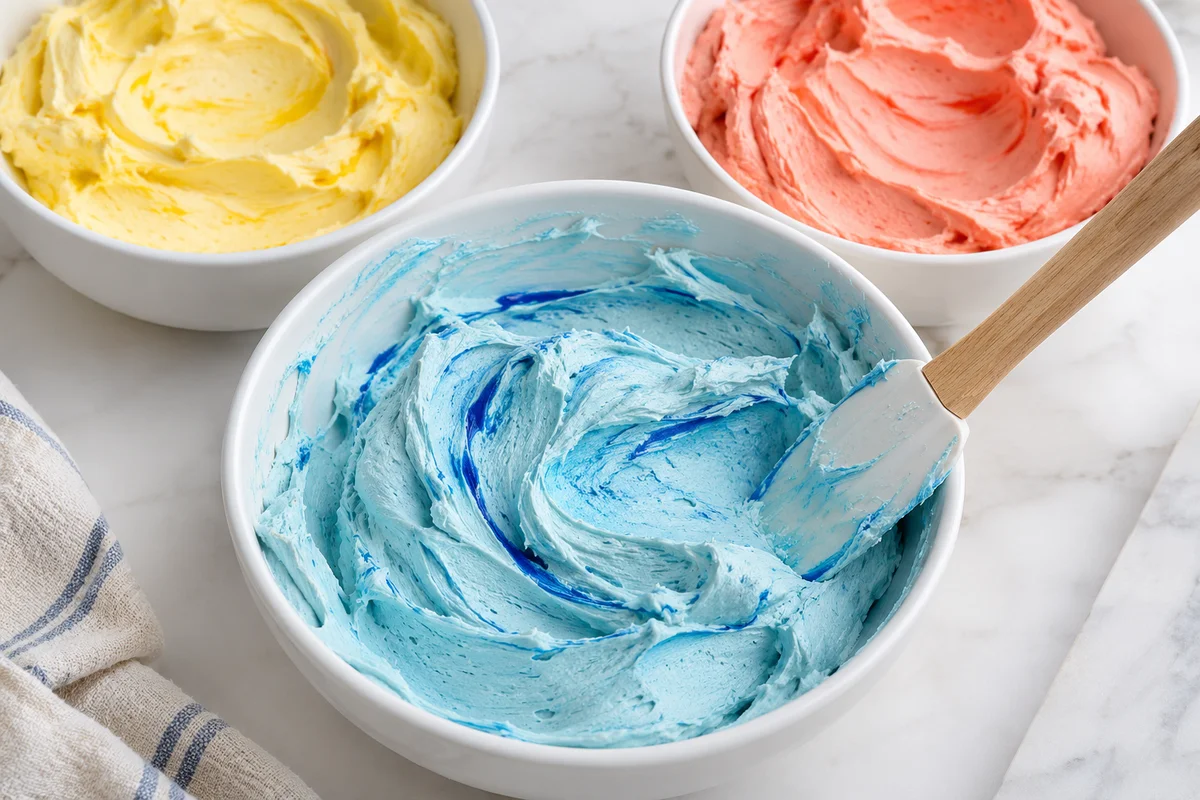
Similarly, adding more dye does not correct a streak created when moisture moves across the surface. Let the underlying condition guide the response. The uneven-color guide separates a tinting problem in the bowl from color changes that appear later on a chilled cake.
Use the visible pattern to choose a check
| Pattern | Likely area to inspect | First response |
|---|---|---|
| Fine drops across the cold cake | Temperature and surrounding humidity | Protect the finish and avoid unnecessary touching. |
| Wet patch beneath fruit | Surface water, damaged fruit or cut juice | Inspect the garnish and contact area. |
| Liquid near one filling seam | Filling condition and assembly | Check the internal source before smoothing outside. |
| Glossy coating slumping downward | Frosting warmth and structure | Restore appropriate conditions and reassess stability. |
Plan the display rather than a universal waiting time
There is no single counter-waiting interval that works for every cake size, frosting, room and humidity level. A small cake and a large filled centerpiece change temperature differently. The same room may also become more humid when guests arrive or cooking begins.
For a home event, keep the cake protected appropriately until its planned presentation, then serve within the relevant safety limits. Arrange plates, knife and any removable decoration instructions beforehand. A coordinated serving plan reduces the pressure to leave the cake exposed simply because setup is incomplete.
Imagine a cake leaving refrigeration beside a steaming kitchen sink. Move the display planning away from that active moisture source instead of assuming the recipe must be changed. Now imagine moisture only beneath a cut-fruit topping: the more useful next step is inspecting that topping, not changing the room's entire temperature. These observations lead to smaller, more accurate interventions.
Record the conditions that matter
Inspect the container as well as the cake before removing a lid. Water collected on the cover can fall onto the finish during opening, creating a localized splash that is easy to mistake for spontaneous sweating. Lift and move the cover carefully, keeping any visible droplets away from the decorated surface.
For the next project, note where the cake was stored, how it traveled, where droplets first appeared and whether the surface softened. Those details make an investigation more useful than a note that simply says “the frosting sweated.” Include wet garnishes and filling changes in the record.
Follow the buttercream storage guide for the handling history behind the decoration. Condensation is a surface phenomenon, not a reliable indicator of whether the dessert has been stored safely. A dry cake can have an unsafe history, and a safely handled cold cake can develop visible droplets during a brief transition.